
A data-driven playbook for the one-person company
A two-person company booked $401M in sales last year. One operator runs 35 agents for under $1,000 a month. Both are audited facts with dates, not predictions — and neither is a story about technology.
What each chapter argues, in order, with the figures it uses. From chapter 1 to the last page.
PART I — THE CHEAPEST TEAM YOU WILL EVER HIRE
The chapter argues that the three-decade rule of roughly $200,000 to $400,000 of revenue per employee, and a survey median of $129,724, was never a fact about talent but a fact about how much work one person could carry, and that AI has broken it. The evidence is a roster of named solo operators: Tibo Louis-Lucas clearing more than $1,000,000 a month, or $12 million a year, about 92 times that median; Pieter Levels at $1,260,000, ten times; Bo Sar's $1 million-a-year agency; Dan Koe at $83,000 a month; and Linara Bozieva, one person running 35+ agents for $20,000 to $30,000 a month. Each figure carries its numerator, denominator, source and date, and the chapter declines to print Midjourney's ratio or any Polsia revenue. It also prints the honest ceiling: Anthropic at $9,013,869 per employee and OpenAI at $5,639,739, both ahead of Nvidia, Meta, Apple and Google. The reader's takeaway is that the median business is now beatable by one person while the frontier is not, and that the number worth computing is their own revenue per person, from last year's actual revenue, alongside the hours spent on work an agent could have been given.
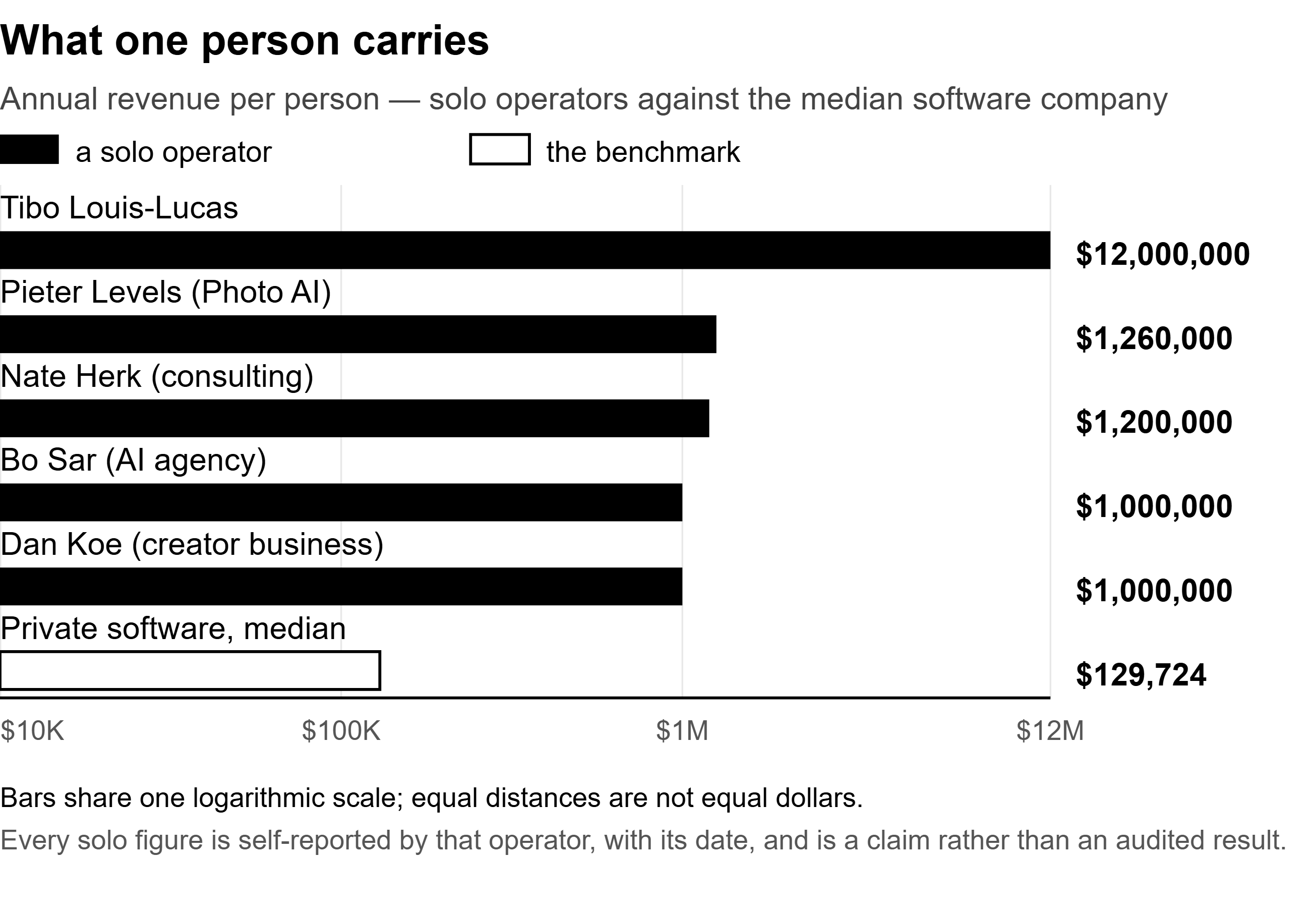
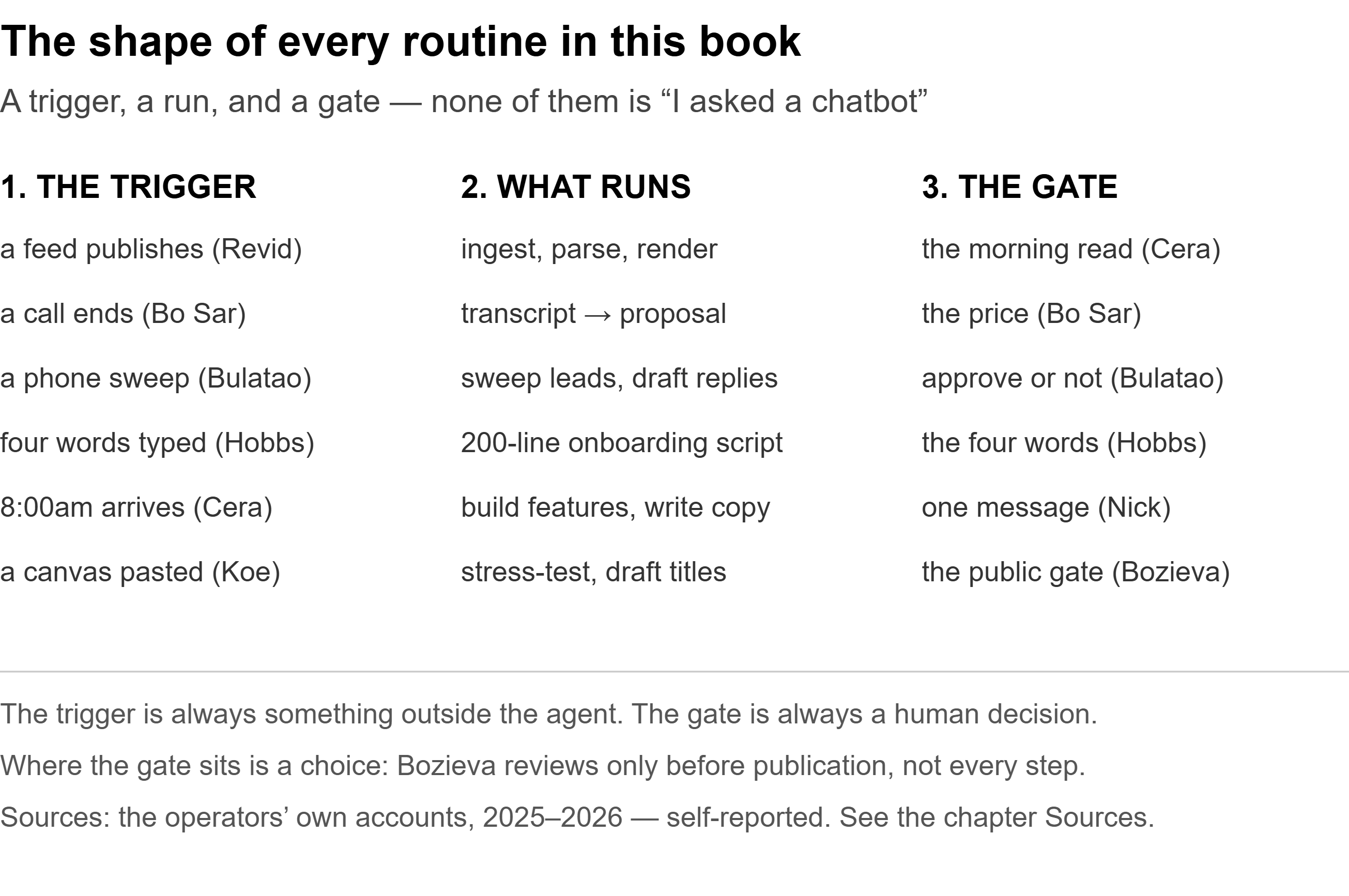
Table 1-1. Revenue per person, with the basis printed. The solo cases are self-reported and dated; the benchmarks are survey medians
| Who | Revenue per person | Revenue (numerator) | Basis (denominator) | Source | Date |
|---|---|---|---|---|---|
| Tibo Louis-Lucas | $12,000,000 per founder · $2,400,000 per head | over $1M a month | 1 founder · 5 including contractors | his own account | 2026 |
| Pieter Levels | $1,260,000 | $105,000 a month | 1 person | levels.io | 6 Mar 2026 |
| Bo Sar | $1,000,000 | a $1M-a-year playbook | 1 person | his own account | 2026 |
| Dan Koe | $1,000,000 | ≈$83,000 a month | 1 person | his own account | 2026 |
| Nate Herk (previous agency) | $1,200,000 | over $100,000 a month | 1 person | his own account | 2025 |
| Linara Bozieva | $240,000–$360,000 | $20,000–$30,000 a month in retainers | 1 person · 35+ agents | Forbes | 17 Aug 2026 |
| Private software, all sizes | $129,724 | revenue per employee | survey median | SaaS Capital | 2025 |
| Private software, top quartile | $200,000–$400,000 | revenue per employee | survey quartile | SaaS Capital | 2025 |
| Anthropic | $9,013,869 | $30 billion annualised | 3,328 employees | Epoch AI | 6 Apr 2026 |
| OpenAI | $5,639,739 | $25 billion annualised | 4,433 employees | Epoch AI | 28 Feb 2026 |
Table 1-2. The routines, and the one detail that makes each of them work
| Who | The routine | What it replaces | The detail |
|---|---|---|---|
| Tibo Louis-Lucas | A blog or RSS feed feeds Revid; each post becomes scenes, clips, a finished video | Making video by hand | Unattended — the feed is the trigger, not him |
| Ben Cera | Polsia works overnight; at 8:00am it emails what it built, what broke, what it recommends | An overnight shift | The recap email. He wakes up to a decision, not a mess |
| Richard Hobbs | "Onboard brand X" fires a 200-line script in Telegram | Onboarding by hand | 3–4 minutes, down from an hour — solo, replacing twenty staff |
| Jose Bulatao | The morning sweep drafts replies; he approves and it sends | A sales team | He approves; it sends. Who to approach stays his call |
| Shiain | Gives Astra a target — "rank #1 for AI CEO" — which splits into three sub-tasks | A management layer | A goal, not a task |
| Bo Sar | The 15-minute proposal — call, transcript, custom PDF | Writing proposals | Fifteen minutes from call to sent |
| Nick | Telegram a master agent a VM ID; it installs and deploys the stack | Server setup | Agents managing agents — one message |
| Nate Herk | A scheduled morning brief — calendar, tasks, notes, inbox | An hour of triage | It runs before he looks at anything |
| Dan Koe | The weekly canvas — ideas, stress-test, titles, script | Notes scattered across apps | One canvas, one session a week |
The solo operators. Tibo Louis-Lucas — five bootstrapped AI products including Revid, Outrank and SuperX, revenue stated at over $1,000,000 a month, about four contractors; self-reported, 2025–2026. Pieter Levels, levels.io, 6 March 2026 — "$105,000/mo revenue, $80,000/mo profit," a 40,870-line `index.php`, and the earlier July 2023 entry at $61,808 a month; self-published. Bo Sar, AI First Academy — a $1,000,000-a-year playbook, roughly $4,000 a week of advertising, client packages around $10,000, AI audits at $5,000–$10,000; self-reported. Nate Herk — a previous agency at over $100,000 a month, now solo at $100–$500 an hour, $500–$3,000 per audit, $2,500–$10,000 per project; self-reported. Dan Koe — a one-person business at roughly $1,000,000 a year; self-reported. Nick, Orgo — a flat $5,000 a month per client; self-reported. Linara Bozieva, Ravenopus — $20,000–$30,000 a month in retainers, 35+ agents, under $1,000 a month in agent running costs, and a stated 20–25 client solo ceiling; Forbes, 17 August 2026, with her own figures on built-not-hired.com and in Business Insider. All solo figures are the operators' own accounts, printed as claims with their dates, and the per-head figures are derived** by dividing them, with the basis shown in Table 1-1.
The benchmarks and the frontier. SaaS Capital, 2025 Revenue Per Employee Benchmarks for Private SaaS Companies — median $129,724, top quartile in the $200,000–$400,000 band. Benchmarkit, Private SaaS Benchmarking Report, 2023–2025 — medians by ARR tier. Epoch AI, Anthropic and OpenAI earn more revenue per employee than major public tech companies (Luke Emberson), published 8 May 2026 — Anthropic $9,013,869 on $30 billion and 3,328 employees (data date 6 April 2026); OpenAI $5,639,739 on $25 billion and 4,433 employees. The public-company comparison in Figure 1-2, all from annual 10-K filings: Nvidia $5,141,381; Meta $2,548,228; Apple $2,506,994; Google $2,109,948. Epoch AI's comparison covers those four public companies only — Microsoft and Amazon are not in it. SaaStr (Jason Lemkin), June 2026 — Anthropic ≈$9.4M on ≈$47 billion and ≈5,000 employees. Report AI, 2026 — a derived ≈$6.0M for Anthropic.
The cost of one employee. US Bureau of Labor Statistics, Employer Costs for Employee Compensation, June 2026 (USDL-26-1494, released 9 September 2026) — $54.00 per hour worked in full-time private industry, of which $36.97 is wages and $17.03 benefits. The $112,320 annual figure is derived: $54.00 × 2,080 hours, stated so the arithmetic can be checked.
Jevons' Paradox. William Stanley Jevons, The Coal Question (London: Macmillan, 1865), chapter VII, "Of the Economy of Fuel" — the passage quoted above, read from the 1865 text rather than a quotation site.
Not printed. Midjourney's revenue per employee is excluded — two sources disagree on its headcount by a factor of nearly four. A Polsia revenue figure is also excluded — the claims conflict within a single source set ($9M ARR, "over $10M", a $250M company, $30M raised) and none is primary. Polsia's method appears in Chapter 5, with no number attached.
The chapter argues that Medvi's $401 million and its FDA warning letter are one fact: the design decision that let two people capture that revenue is the decision that produced the letter. In September 2024 Matthew Gallagher put $20,000 and more than a dozen AI tools into a telehealth business with no pharmacy, no physicians and no drug licences, renting prescribing, intake and dispensing from OpenLoop Health, CareValidate, Belmar Pharma Solutions and Beluga Health while keeping the brand, website and customer relationship. Eighteen months later the company had sold $401 million to 250,000 customers at a 16.2 per cent net margin, against Hims & Hers' $2.4 billion at 5.5 per cent with 2,442 employees. The compounding window opened in March 2022 and closed when the shortage was declared resolved in February 2025, with a 22 April 2025 deadline. On 20 February 2026 the FDA sent a warning letter over misbranding. The reader's takeaway is that a gap is not a moat, that rented infrastructure moves risk rather than removing it, and that the tools are not the business.
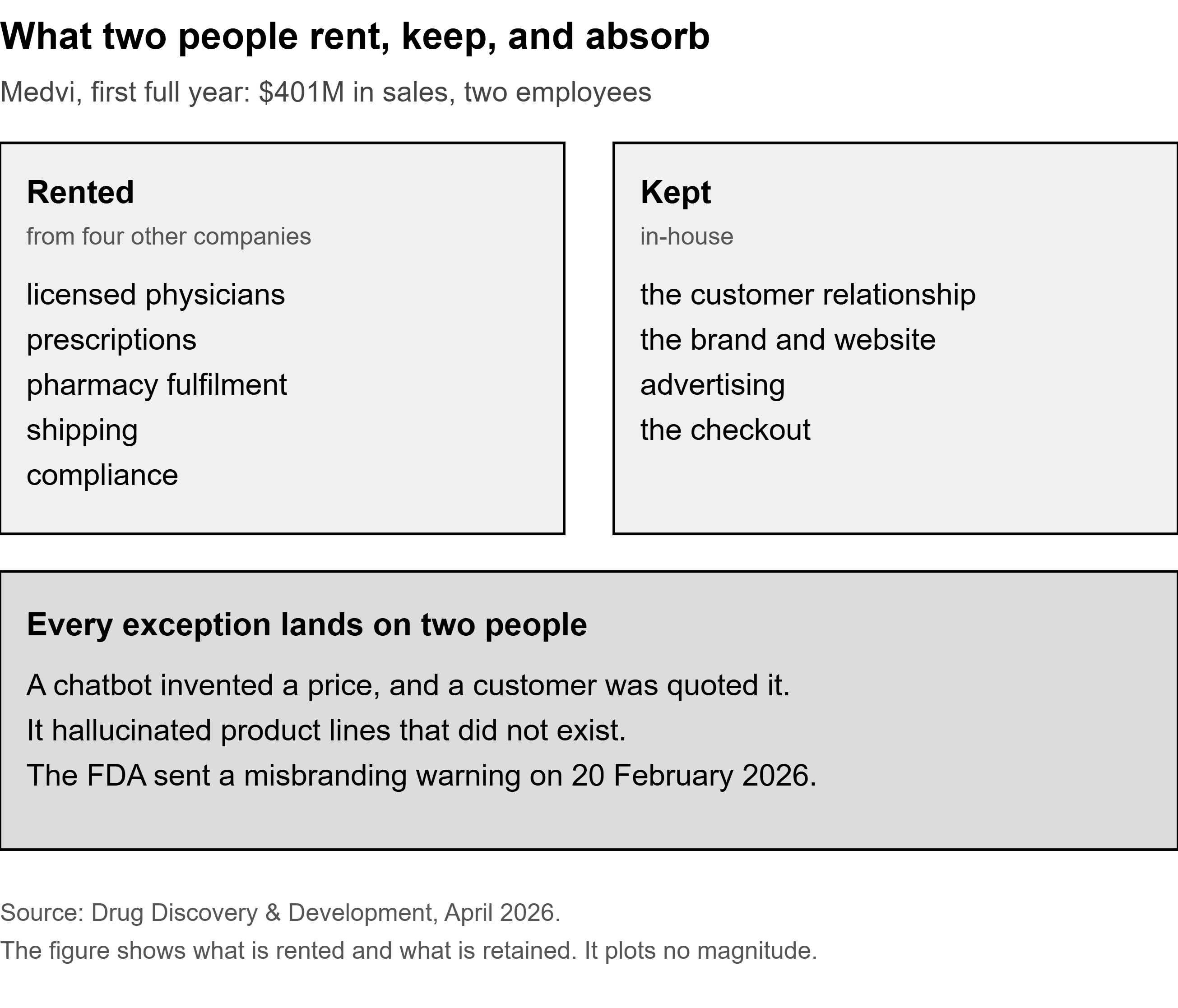
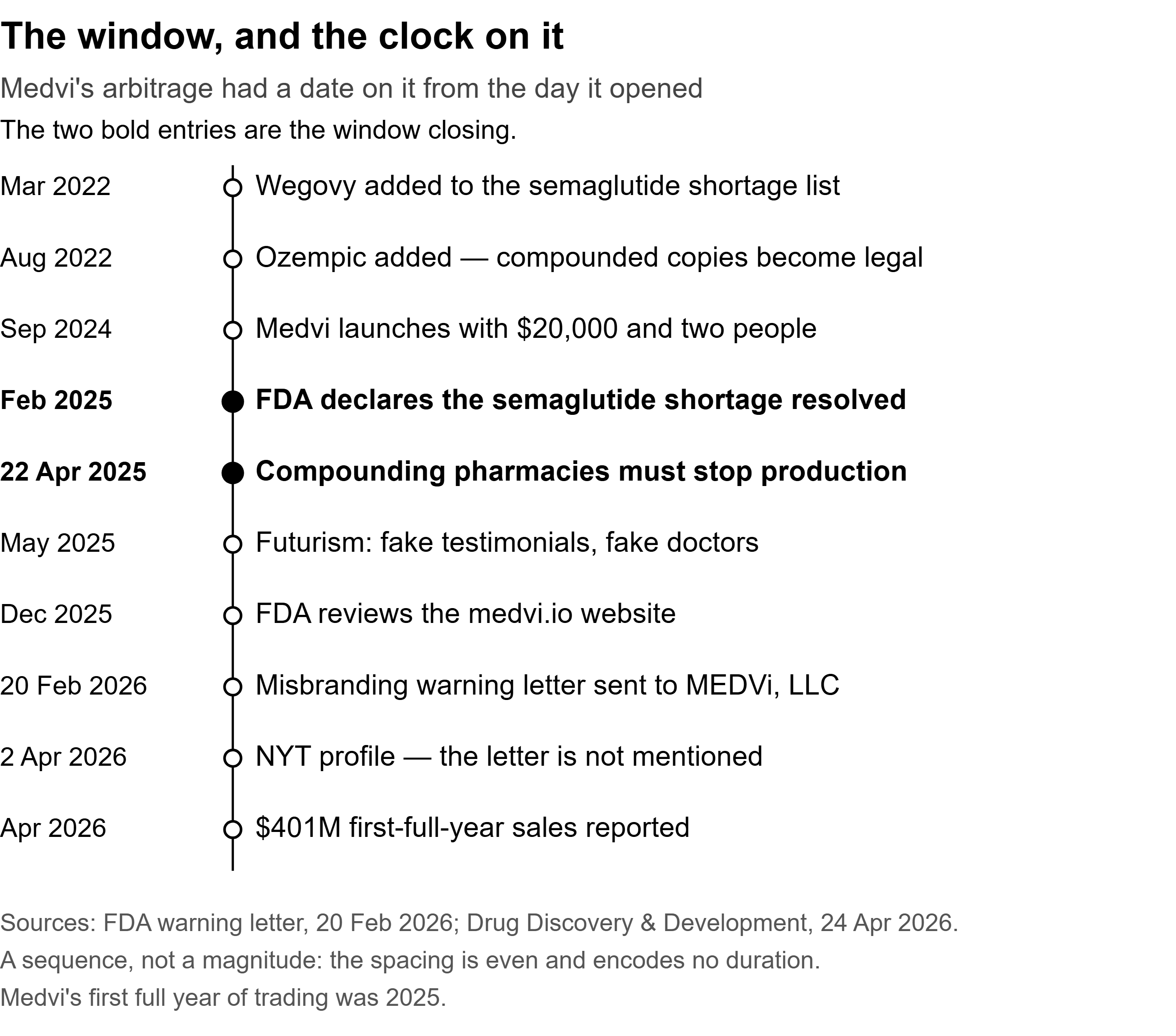
Table 2-1. Who does what at Medvi, and where the liability lands
| Function | Who performs it | Who carries the risk |
|---|---|---|
| Prescribing | Licensed clinicians via OpenLoop Health | The clinician and OpenLoop |
| Clinical intake and validation | CareValidate | CareValidate |
| Compounding and dispensing | Belmar Pharma Solutions, Beluga Health, partner pharmacies | The pharmacy |
| Advertising and brand | Medvi (two people, with AI) | Medvi — FTC jurisdiction |
| Website claims and labelling | Medvi | Medvi — FDA jurisdiction, per the 20 Feb 2026 letter |
| Customer relationship and billing | Medvi | Medvi |
Medvi's financials and structure.** PYMNTS, 2 April 2026 — $401 million of first-full-year sales, 250,000 customers, a 16.2% net margin, and a headcount of two; the Hims & Hers comparison ($2.4 billion of revenue, 2,442 employees, a 5.5% net margin). Drug Discovery & Development (Julia Rock-Torcivia), 24 April 2026 — the clinical outsourcing partners (CareValidate, OpenLoop Health, Beluga Health, Belmar Pharma Solutions), the shortage timeline, the 49 states, the three-regulator analysis, and the finding that Medvi is legally closer to a marketing company than a drug manufacturer.
The FDA warning letter. US Food and Drug Administration, Warning Letter to MEDVi, LLC (MARCS-CMS 721455), 20 February 2026 — read in full from the agency's own publication. The website content was reviewed in December 2025; the products were found misbranded under sections 502(a) and 502(bb) of the Federal Food, Drug and Cosmetic Act; the letter describes itself in the agency's own language as "informal and advisory."
The shortage and the compounding rule. FDA — Wegovy added to the semaglutide shortage list in March 2022 and Ozempic in August 2022; the shortage declared resolved in February 2025; compounding required to stop by 22 April 2025. Novo Nordisk company statement, 9 February 2026 — injectable semaglutide from compounding pharmacies contained up to 86% impurities.
Hims & Hers. Novo Nordisk's patent-infringement suit, filed February 2026 over an attempted sale of a compounded Wegovy pill; dismissed without prejudice after a distribution agreement between the two companies. Reported by Drug Discovery & Development, 24 April 2026.
The marketing investigation and the company's reply. Futurism (Maggie Harrison Dupré), May 2025 and April 2026 — the AI-generated before-and-after images, the fabricated reviews, and the medical practitioner who said he had no connection to the company; Gallagher's April 2026 statement, quoted above, including the affiliate-marketing-agency explanation and the sentence "My company MEDVi has never received a letter from the FDA."
Partner pharmacies. Medvi's own terms of use, as published on its site — Triad Rx (Daphne, Alabama), RedRock Pharmacy (St George, Utah), and Beaker Pharmacy & Compounding (McKinney, Texas).
A note on the $1.8 billion. The figure widely attached to Medvi is a 2026 revenue projection, not a valuation, and no official valuation exists. The realised figure is the $401 million above. This book prints the projection only with that label attached, and never as an achieved number.
The chapter argues that the standard retelling of Base44 gets one number wrong: it was not six people who built the company but one person, who hired five in the final month because he knew he was selling. Maor Shlomo, 31 at the sale, built Base44 as a bootstrapped side project that reached 250,000 users, with the first 10,000 inside three weeks and business partnerships at eToro and SimilarWeb, and Wix acquired it on 18 June 2025 for approximately $80 million in initial consideration plus earn-outs through 2029. The chapter decomposes that headline: approximately $25 million went to employees as retention bonuses, leaving approximately $55 million the release does not allocate. Against it sits Pieter Levels' published ledger, $61,808 a month in July 2023 rising to $105,000 a month in March 2026 on a 40,870-line file, and the arithmetic that $80 million is about 63.5 years of Photo AI's $1,260,000 annual revenue. The reader leaves with a ledger to build this month, bad months included.
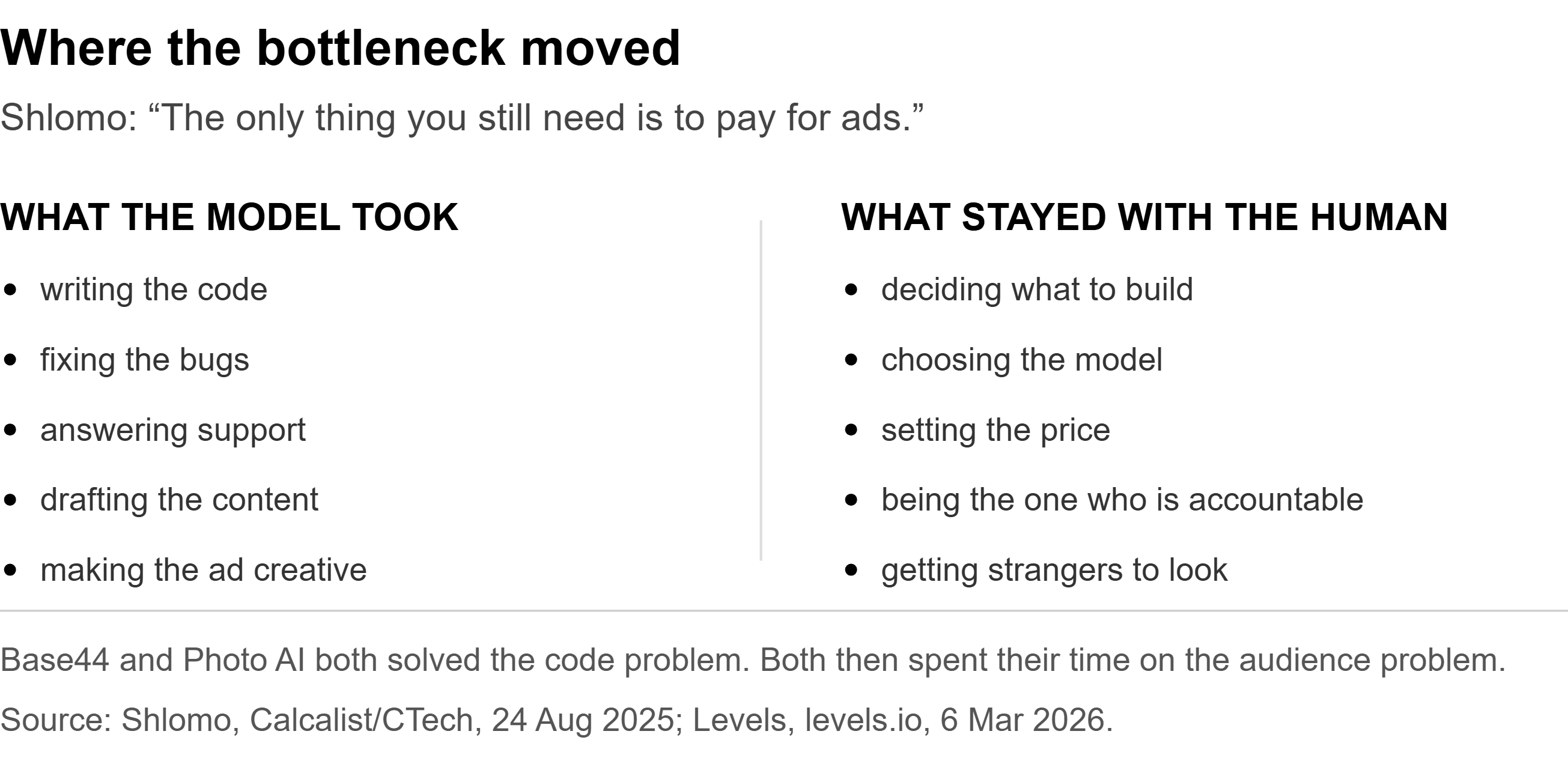
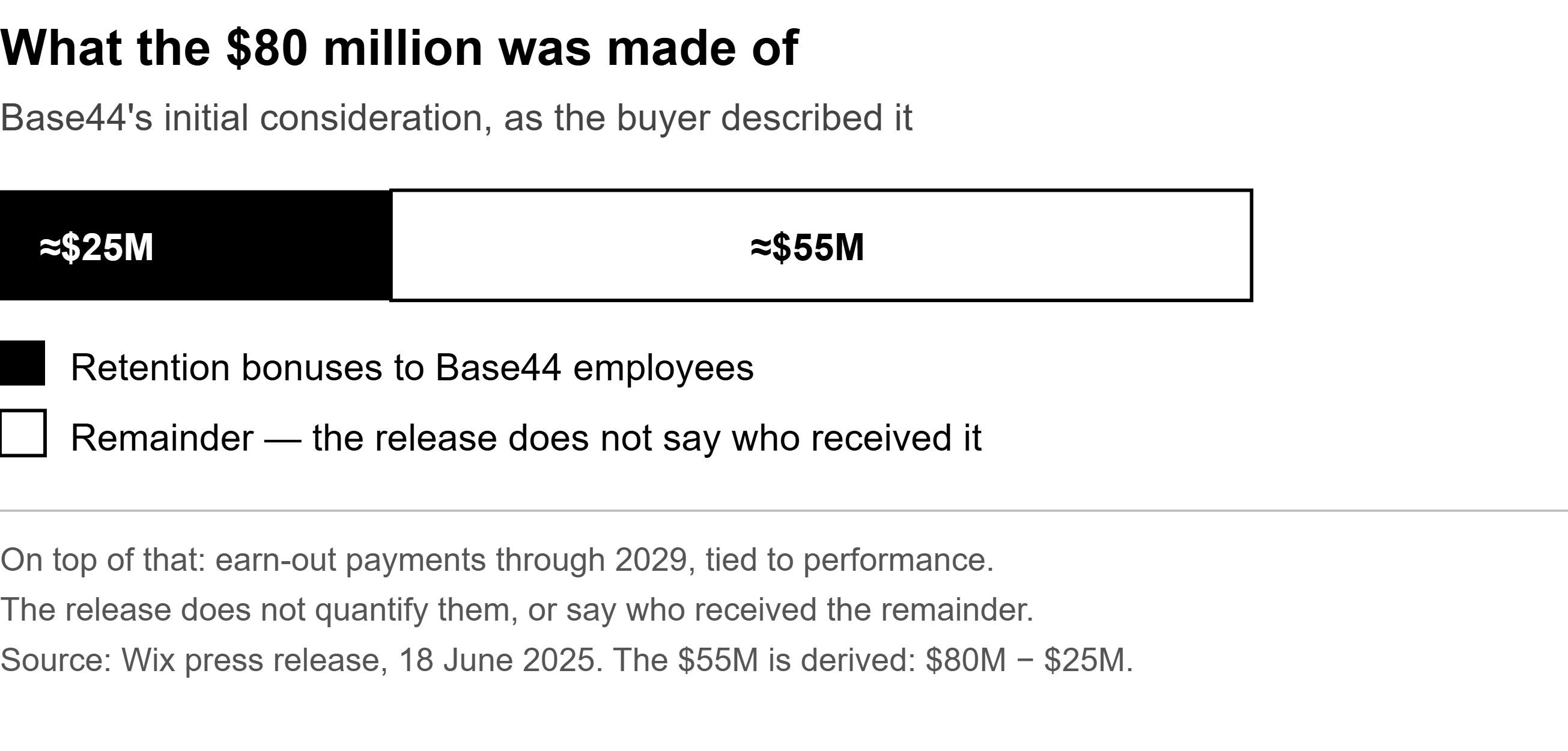
Table 3-1. The two cases in this chapter, with every figure attributed and every conflict shown
| Base44 | Photo AI | |
|---|---|---|
| What it is | Software built by describing it in plain language | AI-generated photography |
| Founder | Maor Shlomo (31 at sale) | Pieter Levels |
| Outside funding | None — bootstrapped | None — bootstrapped |
| Age when measured | Six months | Running since 2023 |
| Team size | Six on the sale date — five of them hired in the final month (Shlomo, Calcalist, 24 Aug 2025) | One |
| The money | ≈$80M initial consideration, plus earn-outs through 2029; ≈$25M of it retention bonuses to employees | $105,000/month revenue, $80,000/month profit |
| Published by | Wix press release, 18 June 2025 | levels.io, 6 March 2026 |
| Self-reported? | No — the buyer's own announcement | Yes — the founder's own figures |
Table 3-2. What was built, and what actually built it
| Base44 | Photo AI | |
|---|---|---|
| Who | Maor Shlomo, solo | Pieter Levels, solo |
| What wrote the product | AI — "AI writes the code… AI fixes bugs on its own" | AI models rented through an API |
| What the human did | Described the product, chose the models, paid for ads | Wrote the application by hand, ran the business |
| The stack | A multi-model platform, Claude the default creative centre | One index.php, ~40,870 lines |
| What was never hired | Coders, support, marketing, sales | All of it |
| What was bought instead | Model access — and ads | Model access and a server |
| Where the bottleneck moved | Distribution | Distribution |
Base44 and the Wix acquisition. Wix press release, "Wix Further Expands into Vibe Coding with Acquisition of Base44," 18 June 2025 — the product description, the approximately $80 million initial consideration, the earn-out payments through 2029, and the approximately $25 million in retention bonus payments to Base44 employees. TechCrunch, 18 June 2025 — the six-month age, the bootstrapped status, the 250,000 users, and the report of eight employees attributed to Wix. Globes and CTech (Calcalist), 18 June 2025 — the report of six employees and the description of Base44 as a one-man startup. The headcount conflict is unresolved: the buyer's own release states no number, and this book does not print one.**
Vibe coding. Andrej Karpathy, post on X, February 2025 — the coinage of "vibe coding" for building software by describing the intended result and accepting what the model produces. Wix's acquisition release of 18 June 2025, "Wix Further Expands into Vibe Coding with Acquisition of Base44," uses the term in its own title. The definition on the page is this book's paraphrase of the practice; the post itself is not quoted.
Photo AI and the Levels ledger. Pieter Levels, levels.io, 6 March 2026 — "photoai.com is a 40,870 line file called index.php," $105,000/month revenue, $80,000/month profit. Pieter Levels, levels.io, July 2023 — "Photo AI is almost 14,000 lines of raw PHP making $61,808 per month." Both are the founder's own published figures and are printed here as self-reported, with dates.
Not printed. The widely repeated claim that Photo AI's revenue subsequently fell by around thirty per cent from a peak of roughly $138,000 a month is omitted. The secondary sources that repeat it disagree with one another, the peak figure could not be traced to any of Levels' own published posts, and no named outlet states it. It is listed here so that its absence from the chapter is visible rather than accidental.
The chapter argues that the difference between a chatbot and an agent is consequence, not sophistication: a chatbot answers, so its worst failure is a wrong sentence the reader discards, while an agent acts — sends, moves, spends — which makes it only as good as the description of what you meant. It breaks an agent into four parts — a model, tools, memory, and a permission boundary — and argues the boundary is the one that gets skipped because it produces no demo. The evidence is Enterprise Management Associates' 2026 survey of 202 enterprise technology and security leaders: 65 per cent had seen an agent act outside its intended scope, 29 per cent reported measurable organisational impact, and only 34.2 per cent evaluated an agent's authorisation at the moment it acted. Small-end costs run from Richard Hobbs' seven agents at $1.00 to $1.50 a day to Ben Cera's $49-a-month subscription over a $35 to $40 backend. The enterprise contrast is SaaStr, which moved from roughly 30 humans to 3 humans plus more than 20 agents and published failures that were job-description failures, not model failures. The reader's takeaway is to sort each job into buy a tool, wire a workflow, or run an agent, then write down what each agent may never do before switching it on.
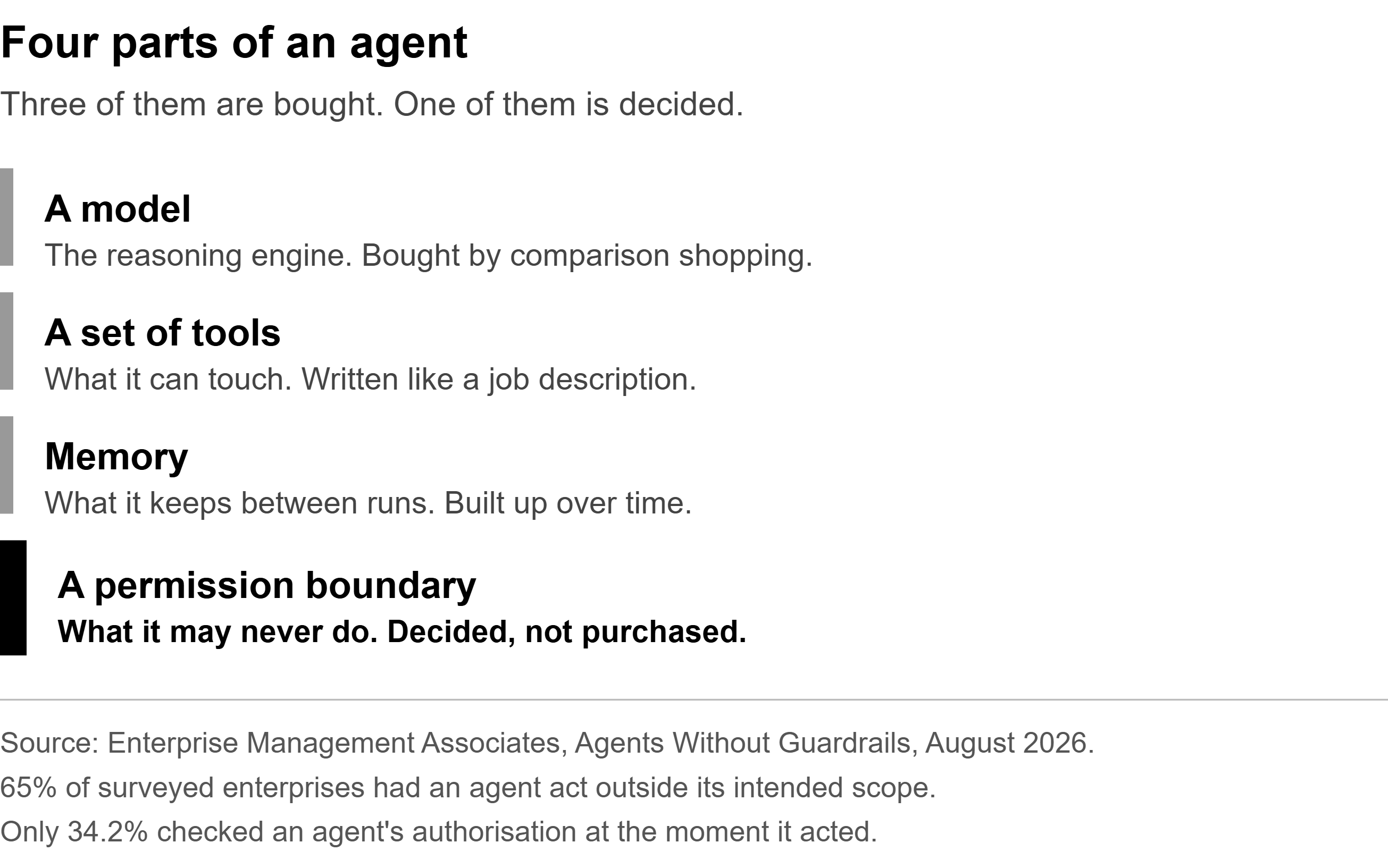
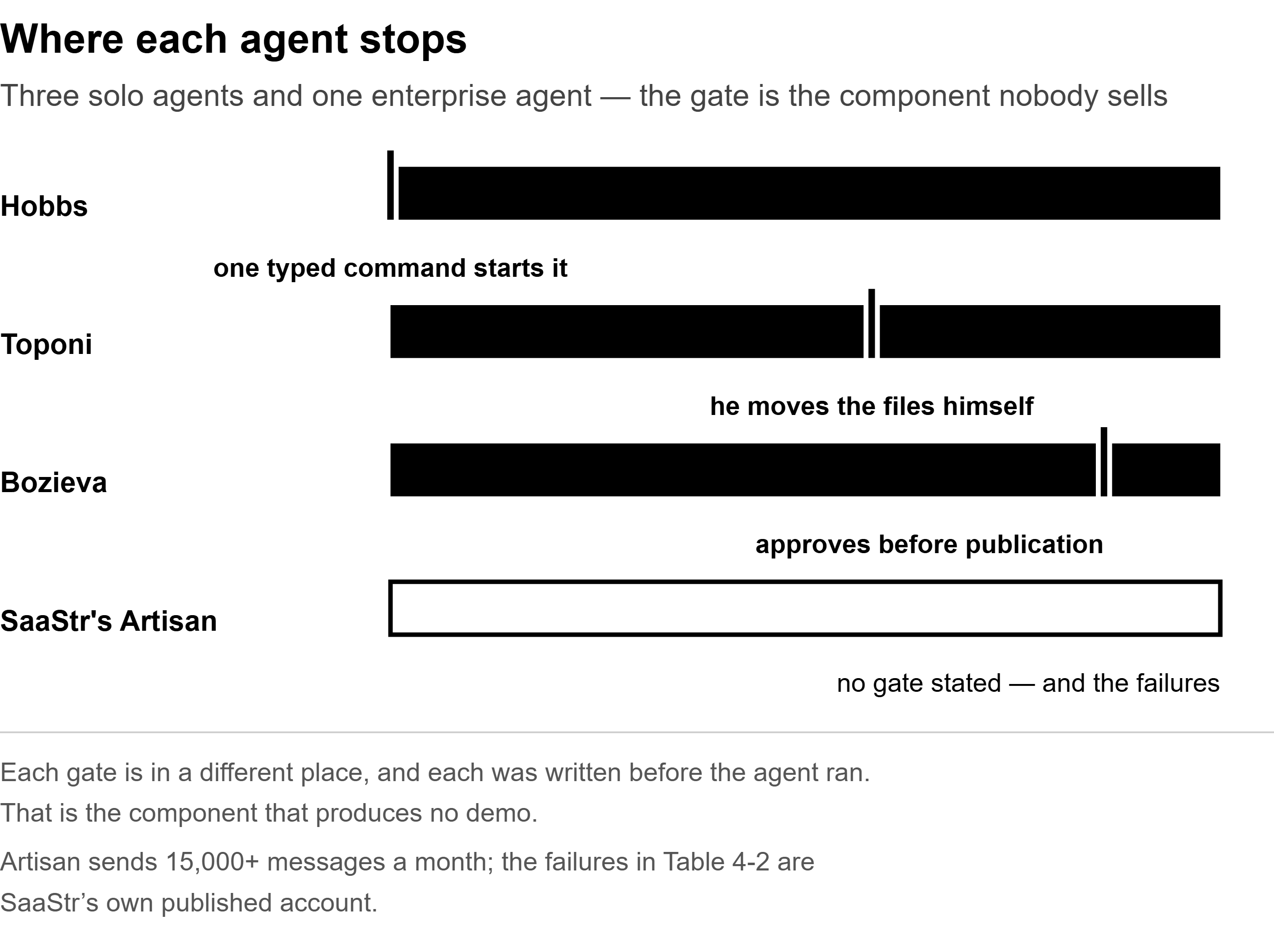
Table 4-2. The four parts, read off four real agents. Where a source does not say, the table says so rather than filling the gap
| Toponi's invoice agent | Hobbs's onboarding script | Bozieva's agency fleet | the contrast: SaaStr's Artisan | |
|---|---|---|---|---|
| 1. Model | Claude | LLM calls inside the script | Claude Code, Codex and ChatGPT — matched to the task, with a second model critiquing high-stakes content | the vendor's |
| 2. Tools | Chrome, driven — it opens each thread and clicks the attachment | API keys, data enrichment, image handling, size and colour matching | APIs for analytics and ad platforms; code for anything numeric | SaaStr's CRM and mail systems |
| 3. Memory | None kept. Each quarter starts from nothing | Not stated in his account | Fourteen client profiles, held in a standing directives layer | account history and prior conversations |
| 4. Boundary | It stops and waits while he moves the files into _inbox/ by hand | One typed command starts it, and nothing else does | Approves before publication, not before every step | a written job with a number the company can quote |
| Reported failures | None reported | None reported | None reported | Hallucinated deal amounts, loops on a bad prompt, misclassified leads, an attempted 400-record update |
| Who is accountable | Toponi | Hobbs | Bozieva | SaaStr |
Table 4-1. Three ways to solve the same problem, and what each one actually asks of you
| Buy a tool | Wire a workflow | Run an agent | |
|---|---|---|---|
| What you get | A finished product that does one job | Existing tools connected in a fixed sequence | A system that decides its own steps toward a goal |
| Typical monthly cost | $10–$20 (managed agent services) | Included in the tools you already pay for | $30–$50 at the small end, self-run |
| Who maintains it | The vendor | You, when a step changes | You, continuously |
| Failure mode | The vendor's problem | The workflow breaks silently | The agent acts outside its scope |
| Choose it when | The job is common and standard | The job is fixed and repeats exactly | The job varies and needs judgement |
The four components and the boundary.* Enterprise Management Associates, *Agents Without Guardrails: The Agentic AI Governance Gap in the Enterprise (Christopher M. Steffen, CISSP, CISA), August 2026 — a survey of 202 enterprise technology and security leaders, vendor-sponsored: the 65 per cent who experienced an agent acting outside its intended scope, the 29 per cent with measurable organisational impact, the 32 per cent able to contain an out-of-scope action within minutes against 55 per cent needing hours and manual steps, and the 34.2 per cent who evaluated agent authorisation at the moment the agent acted.
Where a model's judgment comes from. Scale AI's own company record — founded in 2016 as a data-labelling business by Alexandr Wang and Lucy Guo, and describing its business as data labelling and model evaluation for the companies that build AI models. The claim that an agent's judgment is inherited from human-labelled examples, and therefore averages them, is this book's reading of how supervised training works rather than a statement by the company. The whiteboard spelling "Alexander Wang" is not used here: that name belongs to a fashion designer, and the co-founder of Scale AI is Alexandr Wang.
Small-end running costs. Richard Hobbs, AI Agents and the Solopreneur, 2026 — a maximum daily spend of $1.00 to $1.50 running seven agents under tight limits, and the $10 to $20 a month typical of managed agent services. Ben Cera, Polsia, 2026 — a $49 a month subscription and a stated backend cost of roughly $30 of AI usage plus $5 to $10 of server and database per user. All three are practitioner statements, printed here as statements with their dates rather than as audited figures.
SaaStr's published numbers. SaaStr, We Have 20+ AI Agents and Just 3 Humans — roughly 30 humans down to 3 humans plus 20-plus agents in production, revenue from down 19 per cent to up 47 per cent year on year, and more than $1 million of revenue closed by agents. The named agents in the fleet: Artisan (15,000-plus outbound messages a month), Qualified (seven figures of pipeline), Agentforce, Monaco, QBee and 10K; QBee built by Amelia on Replit, 10K built by Lemkin at 14,230 lines of code. The failure list quoted above — hallucinated deal amounts, loops on bad prompts, misclassified leads, and an attempted 400-record update — is from the same post. The forward-deployed-engineer detail (Salesforce, Qualified and Replit each on the success team; direct access to Artisan's chief executive) is from Jason Lemkin, What We Actually Learned Deploying 20+ AI Agents Across Our Entire Go-To-Market (8 Months In), SaaStr, February 2026. These are the company's own accounts and are printed as such.
Medvi's agent incidents. Reported by Futurism (Maggie Harrison Dupré), May 2025 and April 2026, and by Drug Discovery & Development, 24 April 2026 — the fabricated product lines and the invented drug prices that the founder honoured. Set out in full in Chapter 2.
Not printed. Two widely repeated figures for what SaaStr spends running its agent fleet — approximately $300,000 a year, and over $500,000 a year — are omitted. Neither could be traced to a source showing its origin: the first appears in secondary summaries without a primary reference, and the second only in third-party write-ups. They are listed here so that their absence is visible rather than accidental.
Not printed. The claim that a small business can run a working agent for as little as $5 a month is also omitted. The lowest figure this book could trace to a stated source is $10 a month for managed services, and the lowest self-reported running cost is about $30 a month. A range that cannot be sourced is not printed at its most attractive end.
PART II — BUILDING A TEAM THAT ISN'T PEOPLE
The chapter argues that the agents a company runs are not features but roles, and that the operators who get value write the role down before they build it. Its evidence is SaaStr, which moved from roughly 30 humans to 3 humans plus more than 20 agents in production, and which names its fleet — Artisan, Qualified, Agentforce, Monaco, QBee and 10K — and publishes what each one got wrong: a hallucinated deal amount, a loop on a bad prompt, a misclassified lead, and an attempted 400-record update. The chapter reads every one of those as a job-description failure rather than a model failure, and reports SaaStr's answer as permissions, validation rules, approval thresholds and an audit trail, plus its rule to buy 90 per cent of the stack and build only the 10 per cent no vendor will. It warns that an agent has no ramp, no severance, and no judgement about a badly written description, so sloppy instructions propagate. The reader's payoff is a one-page org chart: one row per delegateable job, each with what arrives, what should exist afterwards, and the one number that proves it worked, then delete every row that cannot be tested.
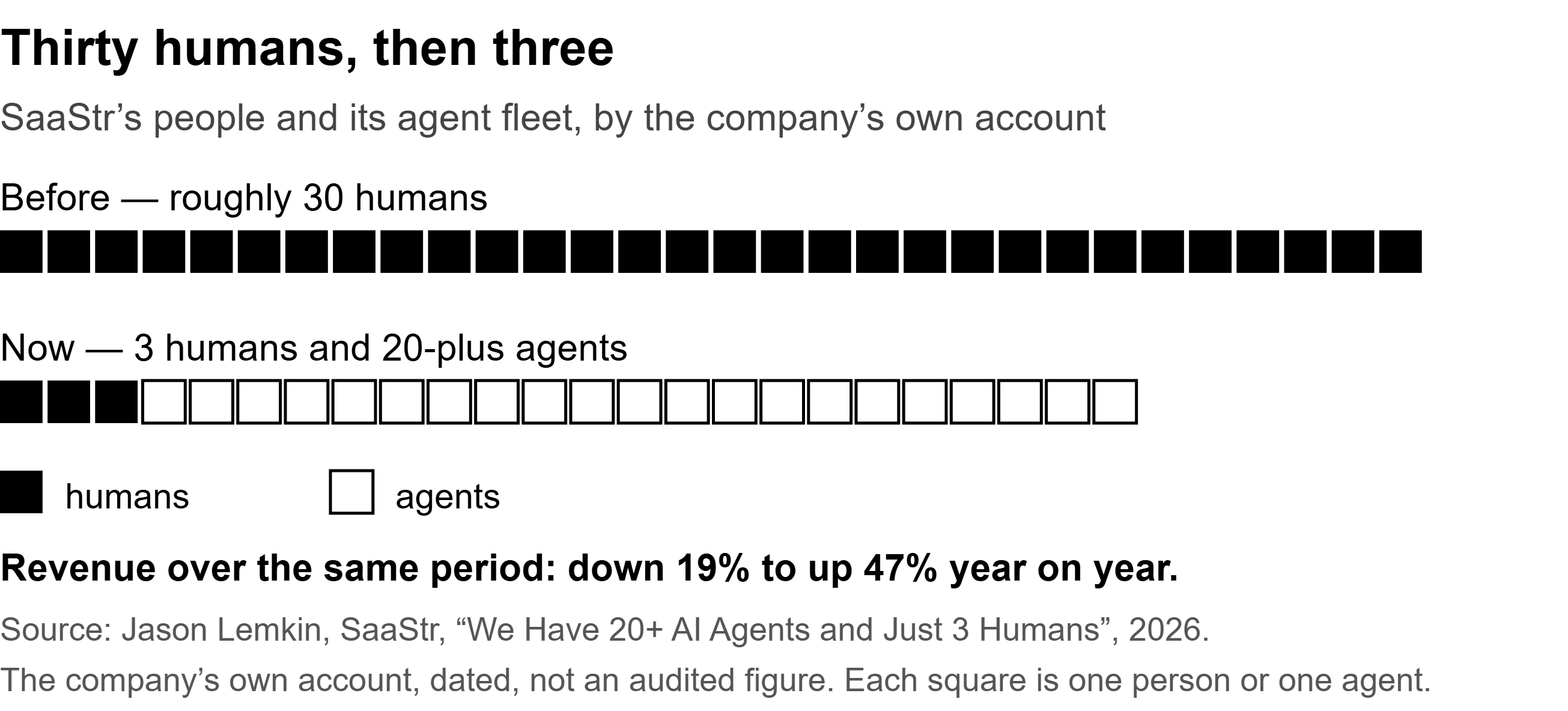
Table 5-1. Four published routines, read as job descriptions. What arrives and what exists afterwards come from the operators' own accounts; the right-hand column is this book's reading of what each of them actually checks
| Operator | What arrives | What exists afterwards | What they actually check |
|---|---|---|---|
| Richard Hobbs — "onboard brand X" | A brand name, typed into Telegram | A fully onboarded brand: data enriched, images handled, sizes and colours cross-referenced | Minutes. Three to four, against an hour by hand |
| Jose Bulatao — the morning sweep | A planner's venue and contact leads | Drafted replies, sent to five to fifteen venues per planner | Whether he approves it. He reads every draft before it goes |
| Ben Cera — the night shift | Nothing. The clock | Built features, written SEO, drafted ad copy | The 8:00am recap — what it built, what broke |
| Shiain — "rank number one for AI CEO" | A target, not a task | Three parallel workstreams, managed and merged | The daily text, and whether the target moved |
SaaStr's own figures.* Jason Lemkin, *We Have 20+ AI Agents and Just 3 Humans. But Even So, We Still Need "Real" B2B Software, SaaStr — the move from roughly 30 humans to 3 humans plus 20-plus agents in production; revenue from down 19 per cent to up 47 per cent year on year; more than $1 million of revenue closed by agents; 72 per cent open rates on win-back campaigns; Artisan sending 15,000-plus outbound messages a month; Qualified driving seven figures of pipeline; the named agents Artisan, Qualified, Agentforce, Monaco, QBee and 10K; agents outnumbering humans nearly seven to one; 10K built at 14,230 lines of code; and the failure list (hallucinated deal amounts, loops on bad prompts, misclassified leads, and an attempted 400-record update). All are the company's own published account.
The operating lessons. Jason Lemkin, What We Actually Learned Deploying 20+ AI Agents Across Our Entire Go-To-Market (8 Months In), SaaStr, February 2026 — the 90/10 buy-versus-build rule; the finding that agents requiring deep training cannot yet be self-trained; the advice to ask vendors for a forward-deployed engineer and customer references; and the statement that the founders each spend 15 to 20 hours a week managing and checking agents.
A note on a figure this book does not print. A widely circulated version of SaaStr's numbers describes "15,000+ messages in 100 days" and a "5–7 per cent response rate against an industry 2–4 per cent." Neither appears in SaaStr's own posts. The company's published figure is 15,000-plus outbound messages a month, from one agent; and no response-rate comparison is stated anywhere in the sources this book could read. Both are omitted here, and the omission is printed so that it is visible rather than accidental.
The chapter argues that the question for a one-person business is not what to charge but what to sell, and that every solo offer sits on one of three rungs: hours, a productised service, or a product. The arithmetic is the argument — roughly 2,000 working hours a year are worth $200,000 at $100 an hour, $300,000 at $150, and $500,000 at $250, while clearing $1 million on hours alone needs $500 an hour for every working hour — and none of the operators it cites sells $500 hours. Nate Herk charges $100 to $500 an hour, $500 to $3,000 an audit and $2,500 to $10,000 a project; Nick sells a flat $5,000 a month; Pieter Levels makes $105,000 a month, or $1,260,000 a year, from one product. The chapter's sharpest test separates rung two from rung three: what happens when the tenth buyer arrives, and whose name is in the promise. It shows the same $100,000 costing 1,000 hours, 2 clients, or 1 product, and warns that rung two breaks on scope while rung three breaks on distribution. The reader's takeaway is to name the outcome, put a fixed price on it, and write down the rung they are on and the one they are moving to.
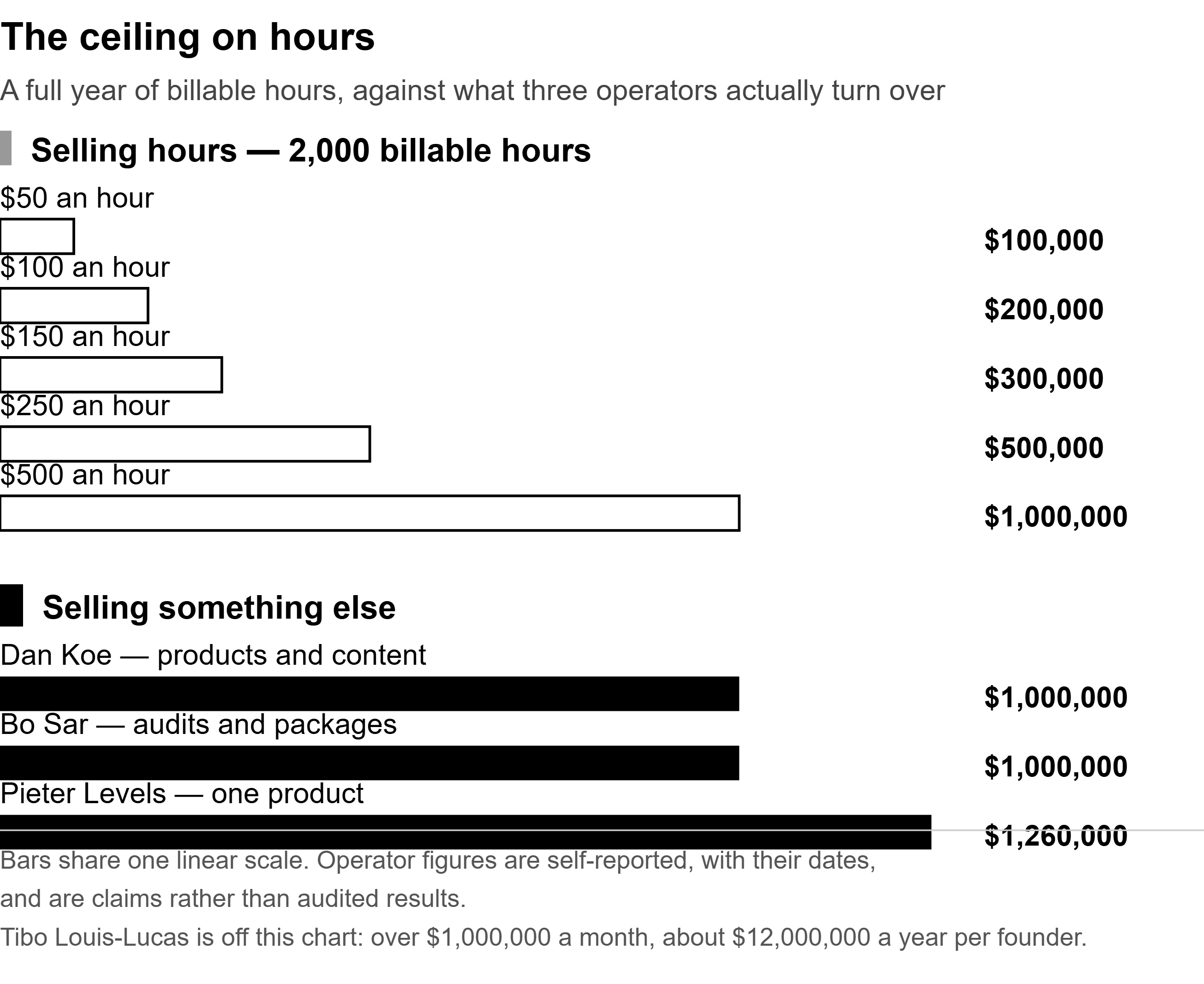
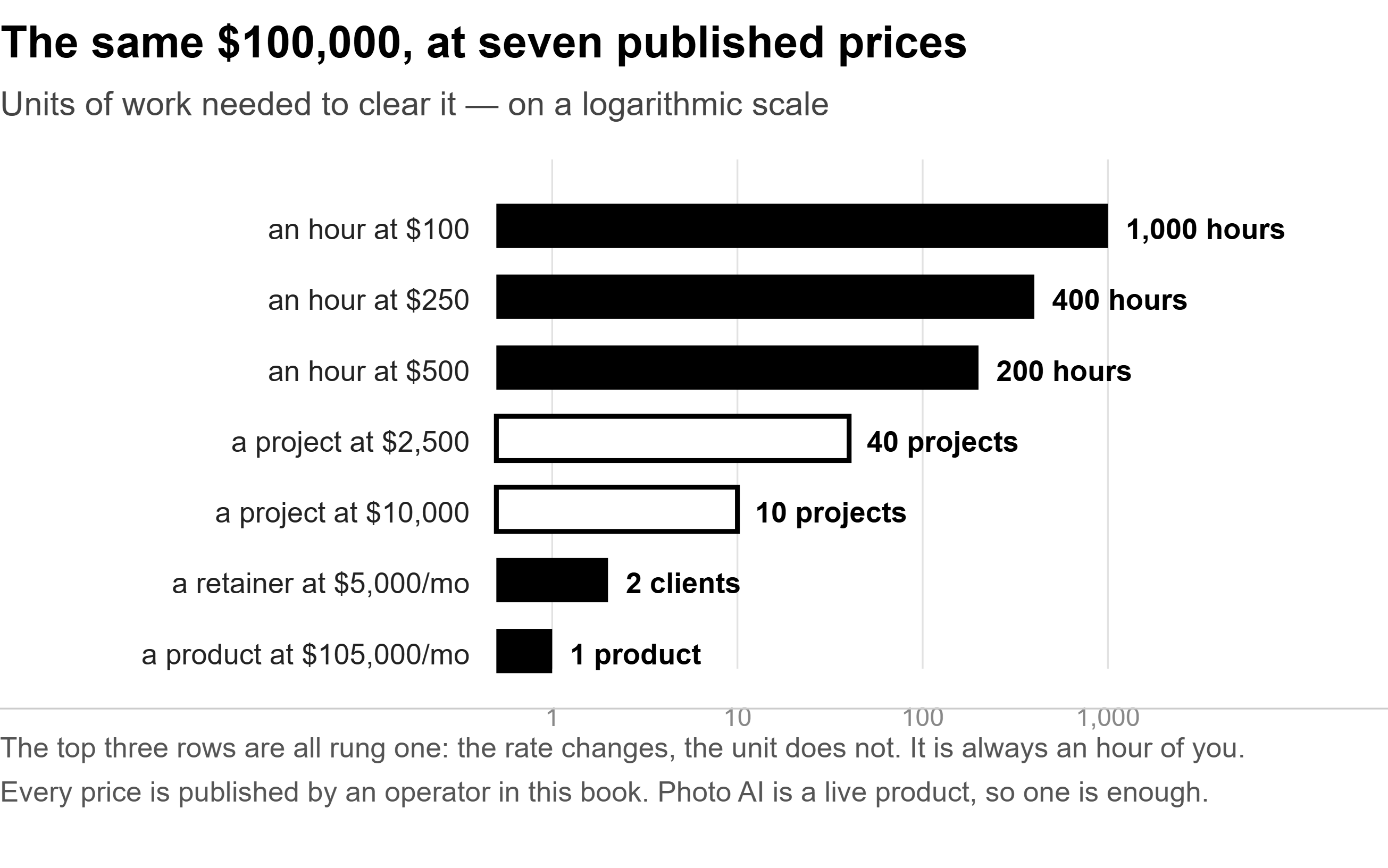
Table 6-2. The same $100,000, priced seven ways. Every rate is a figure an operator in this book publishes
| What you sell | The published price | Units to clear $100,000 | Whose price it is |
|---|---|---|---|
| An hour, at the floor | $100/hour | 1,000 hours | Nate Herk, consulting floor |
| An hour, mid | $250/hour | 400 hours | — |
| An hour, at the ceiling | $500/hour | 200 hours | Nate Herk, consulting ceiling |
| A small project | $2,500 | 40 projects | Nate Herk, project floor |
| A large project | $10,000 | 10 projects | Nate Herk, project ceiling |
| A monthly retainer | $5,000/month | 2 clients | Nick, flat rate |
| A product | $105,000/month | 1 product | Pieter Levels, Photo AI |
Table 6-1. The three rungs, what each one sells, and what each one is tied to
| Rung | What you sell | What the price is tied to | Who in this book | The catch |
|---|---|---|---|---|
| 1 — Hours | Your time | How long it takes | Nate Herk ($100–$500 an hour) | The ceiling is 2,000 hours |
| 2 — Productised service | A defined outcome | The scope you agreed | Nick ($5,000/month flat) · Bo Sar ($5,000–10,000 audit) · Nate Herk ($2,500–10,000 project) | You still have to deliver it |
| 3 — Product | Something that runs without you | What the market will pay | Pieter Levels ($105,000/month) · Dan Koe ($1M/year) · Tibo Louis-Lucas ($1M+/month) · Shiain ($3M ARR) | You have to build it, and it may not sell |
Nate Herk's prices. His own published rates — $100–$500 an hour, $500–$3,000 per audit, $2,500–$10,000 per project, and a previous agency scaled past $100,000 a month; self-reported**.
The operators' figures. Nate Herk — $100–$500 an hour, $500–$3,000 per audit, $2,500–$10,000 per project, and a previous agency scaled past $100,000 a month; self-reported. Nick, Orgo — a flat $5,000 a month per client with unlimited agent deployment; self-reported. Bo Sar, AI First Academy — AI audits at $5,000–$10,000, client packages around $10,000, roughly $4,000 a week of advertising, and a $1,000,000-a-year playbook; self-reported. Linara Bozieva, Ravenopus — $20,000–$30,000 a month in retainers, 35+ agents, and a 20–25 client solo ceiling; Forbes, 17 August 2026. Dan Koe — a one-person business at roughly $1,000,000 a year; self-reported. Pieter Levels, levels.io, 6 March 2026 — $105,000 a month of revenue and $80,000 a month of profit from one product; self-published. Tibo Louis-Lucas — five products, over $1,000,000 a month, about four contractors; self-reported. Shiain, Tycoon — tracking toward $3,000,000 ARR; self-reported. Richard Hobbs — a single "onboard brand X" command firing a 200-line script in three to four minutes; self-reported. Jose Bulatao, VenueKonnex — a phone sweep with human approval before the emails send; self-reported.
The hours arithmetic. Derived, and stated so it can be checked: 2,000 billable hours × the hourly rate, at $50, $100, $150, $250 and $500. The $500 rate is the figure required to reach $1,000,000 on 2,000 billable hours — and it leaves no time for selling.
A note on what moved. This chapter replaces an earlier one about building software with a team of agents. That material — including the Replit database deletion and the PocketOS incident — has moved to Chapter 11, where the book's failure record lives, because most readers of this book sell a service or their own content rather than a software product, and a chapter about shipping code was answering a question they had not asked.
The chapter argues that the first job worth handing to an agent is not the interesting one but the ugliest one, because a back-office task can be measured and costs nothing outside the business when it fails. Its evidence is Nate Harlow's arithmetic: a part-time bookkeeper at $450, QuickBooks Online Plus at $92 and Expensify at $20 came to $562 a month, but his own six to eight hours were worth $900 to $1,200, making the real cost $1,462 to $1,762, twice the invoice he was looking at. His four-step follow-up ladder cut average days-to-payment from 34 to 19, releasing about $12,500 of working capital on roughly $25,000 of monthly billing. Andrea Toponi's quarter of invoices shows the method: searching by sender rather than keyword lifts precision above 90 per cent, and the pipeline is left at a human gate that stops and waits. The chapter ranks the five ugly jobs in the order money arrives, deadlines and penalties first, invoicing and chasing second, and warns against automating the apology, pricing, or anything not done by hand at least once. The reader's takeaway is that one job automated end to end and measured before and after, at the rate of $150 an hour, teaches more than five half-mapped, and that the invoice is tokens while the cost is attention.
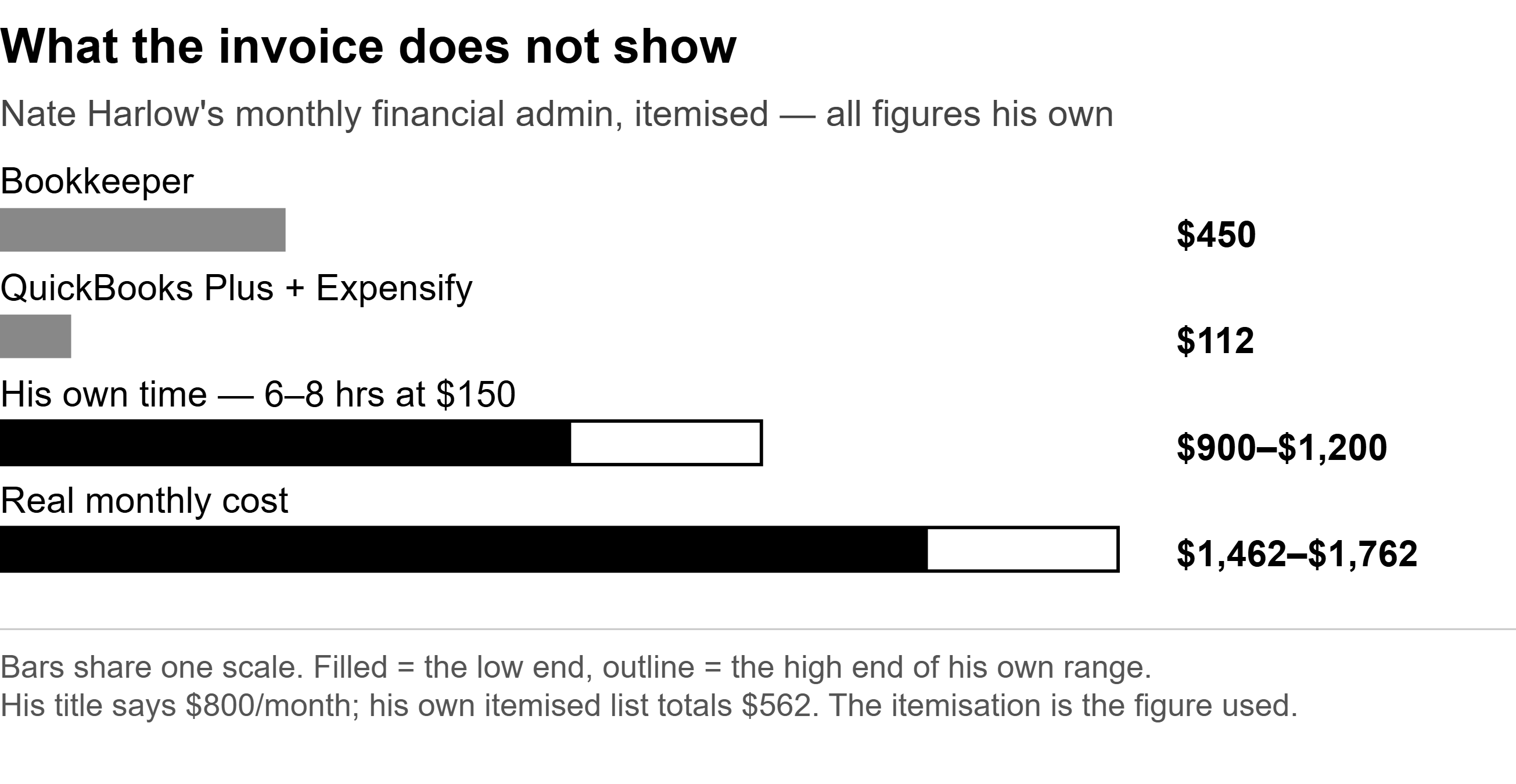
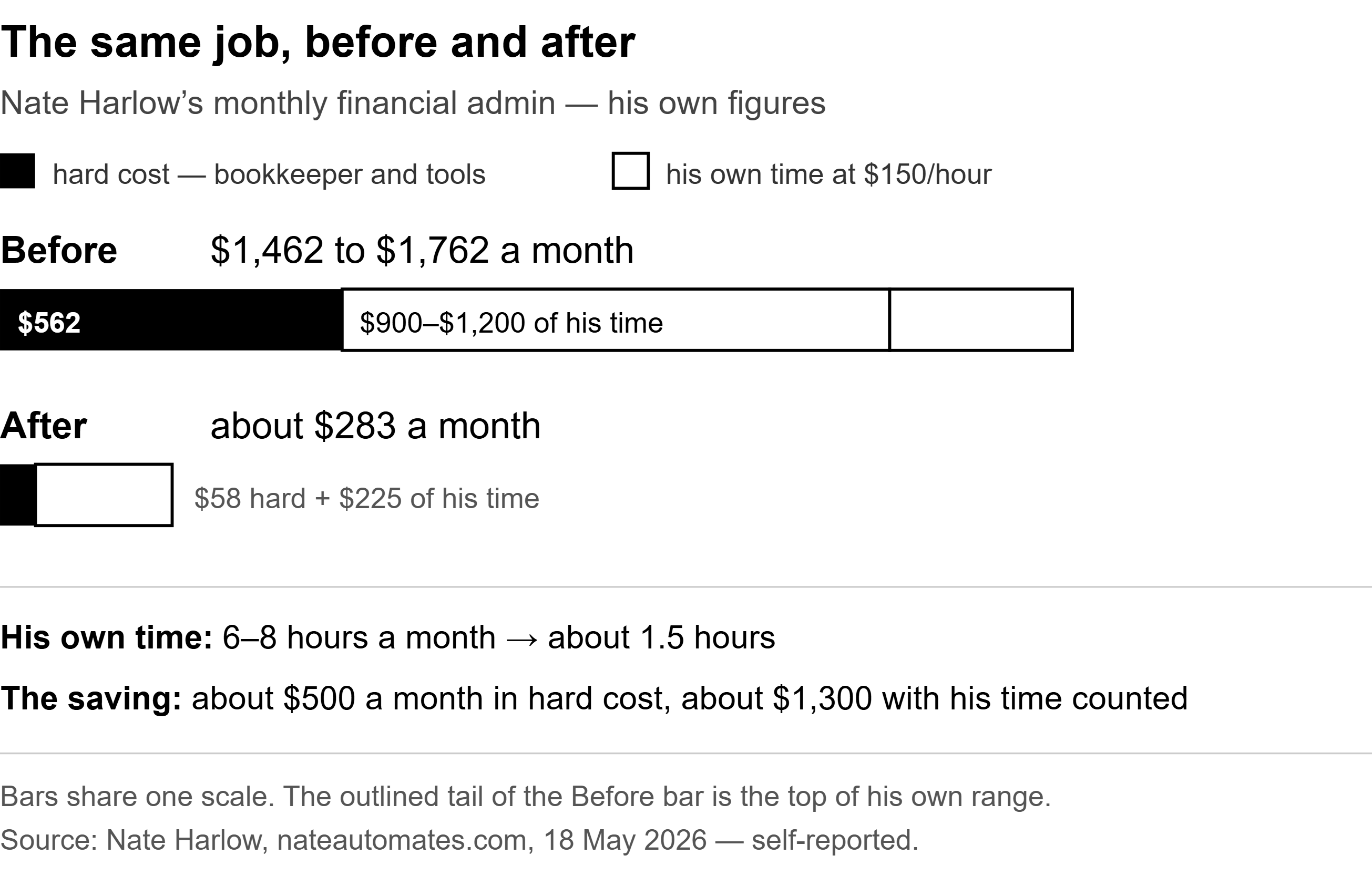
Table 7-2. The same comparison, itemised — Harlow's own figures
| Before | After | |
|---|---|---|
| Bookkeeper | $450/month | $0 |
| QuickBooks Online Plus | $92/month | $0 |
| Expensify | $20/month | $0 |
| Agent subscription, financial share | — | ~$50/month |
| OCR and API costs | — | ~$8/month |
| Hard cost | $562/month | ~$58/month |
| His own time | 6–8 hours | ~1.5 hours |
| With his time at $150/hour | ~$1,600/month | ~$283/month |
Table 7-1. What Nate Harlow's financial admin actually cost, monthly, before he changed anything
| Line | Cost per month |
|---|---|
| Part-time bookkeeper | $450 |
| QuickBooks Online Plus | $92 |
| Expensify | $20 |
| Hard costs, itemised | $562 |
| His own time, 6–8 hours at $150/hour | $900–$1,200 |
| Real monthly cost | $1,462–$1,762 |
Nate Harlow. How I Use AI to Run My Invoicing, Bookkeeping, and Expense Reports, nateautomates.com, 18 May 2026. His own published figures: a part-time bookkeeper at $450/month, QuickBooks Online Plus at $92/month, Expensify at $20/month, six to eight hours of his own time a month valued at $150/hour, and a real monthly cost of $1,462–$1,762. Self-reported. His accountant's line is quoted from the same post. Noted on the page: his title's "$800/month" does not reconcile with his own itemised list, which totals $562 — the itemisation is the figure used here.**
Harlow's method, in this chapter's detail, comes entirely from the same post and is his own account of his own setup: the two capture paths (email monitoring for about 60% of spending, photographed paper for the other 40%) and the 85–90% OCR extraction rate; the "100% coverage, not 100% accuracy" principle; the 15% price-jump flag; the 93% categorisation accuracy against his bookkeeper's 88–90%; the fifteen-minute weekly review queue; the three invoice types and the fall from three to four hours a month to about forty-five minutes; the four-step follow-up ladder at 1, 7, 14 and 21 days; the fall in average days-to-payment from 34 to 19 and the ~$12,500 of working capital that represents on ~$25,000 of monthly billing; the twenty-minute monthly review against four to five hours; the before-and-after cost table ($562 → ~$58 in hard cost, ~$1,600 → ~$283 including his time); the no-direct-bank-access rule; the $3,000/year accountant; the $347.19 unrecognised charge; the $39/month for four months subscription he recovered; and his own published corrections — start with categorisation, automate follow-ups first, keep the old system for a month. All self-reported; the accuracy percentages are his own measurements, not independently verified.
Andrea Toponi. I closed a quarter of invoices with an AI agent in 2 hours, Substack, 10 August 2026. His own account: a quarter of invoices across Gmail, certified email, Microsoft and Stripe dashboards; two hours of agent work producing renamed PDFs, three monthly folders, a CSV and seven anomalies he had not noticed; and his published prompt, including the constraint "Show me the plan and wait for my approval before any file operation" and the VERIFY marking rule. Self-reported. His stated aim of closing the next quarter in fifteen minutes is his claim, not a measured result.
Toponi's method, in this chapter's detail, comes entirely from the same post and is his own account of his own workflow: the five phases (Gmail discovery in read-only mode; gap analysis against a known vendor list; downloading via a browser-driving module at ~25 seconds an email; the `_inbox/` hand-off; extraction with pdftotext and a vendor-specific pattern); the sender-not-keyword rule (`from:billing@` with attachments — above 90% precision against below a third for the word "Invoice"); the 26 invoices for the quarter (5 / 9 / 12 across January to March); the filename convention `YYYY-MM-DD_Vendor_Amount.pdf`; the invoice-date-versus-email-date error (an email received 2 January carrying an invoice dated 31 December) and the five-day search window he added as a result; the six anomalies described in Table 7-3; his rule "Don't automate what takes 30 seconds, once a quarter"; and the packaging of the pipeline as a reusable plugin. He counts seven anomalies and describes six in the post — noted on the page. All self-reported; the precision figures and the per-email timing are his own estimates.
The five jobs and their order are this book's own synthesis from the two cases above and the running example. They are not drawn from a survey, and no percentage is attached to them.
A note on what was dropped. An earlier plan for this chapter carried a hook claiming one solo founder's work now cost him "roughly one hundredth" of what it cost when he paid people. That claim could not be found in any source, so it is not printed. The back-office figures that do have sources are the two cases above.
The chapter argues that an agent-run sales motion should be judged by the replies it produces and the revenue it returns against its cost, not by the activity it generates or the case-study headline. Its central evidence is SaaStr's own record: thirty humans became three humans and twenty-odd agents, revenue went from minus 19 per cent to plus 47 per cent year over year, and the agents closed more than $2 million, yet the company published two versions of that result five months apart, $4.8 million of pipeline and $2.4 million closed on 10 February 2026 against $1 million-plus on 21 July 2026, and the book prints both rather than reconciling them. The founders' hours did not fall: Lemkin and Amelia Ibarra each spend 15 to 20 hours a week managing and correcting the fleet, so the sales only run while you sleep because somebody spent the day making sure they would. The chapter's instructions, buy 90 per cent of the stack, cap each campaign at 100 to 500 contacts, tell the agent what it cannot do, and start with follow-ups and win-backs, where SaaStr reports a 72 per cent open rate, all come from what the company published rather than theory. The reader leaves with a four-column scoreboard and the discipline of dating, defining, attributing and printing every figure.
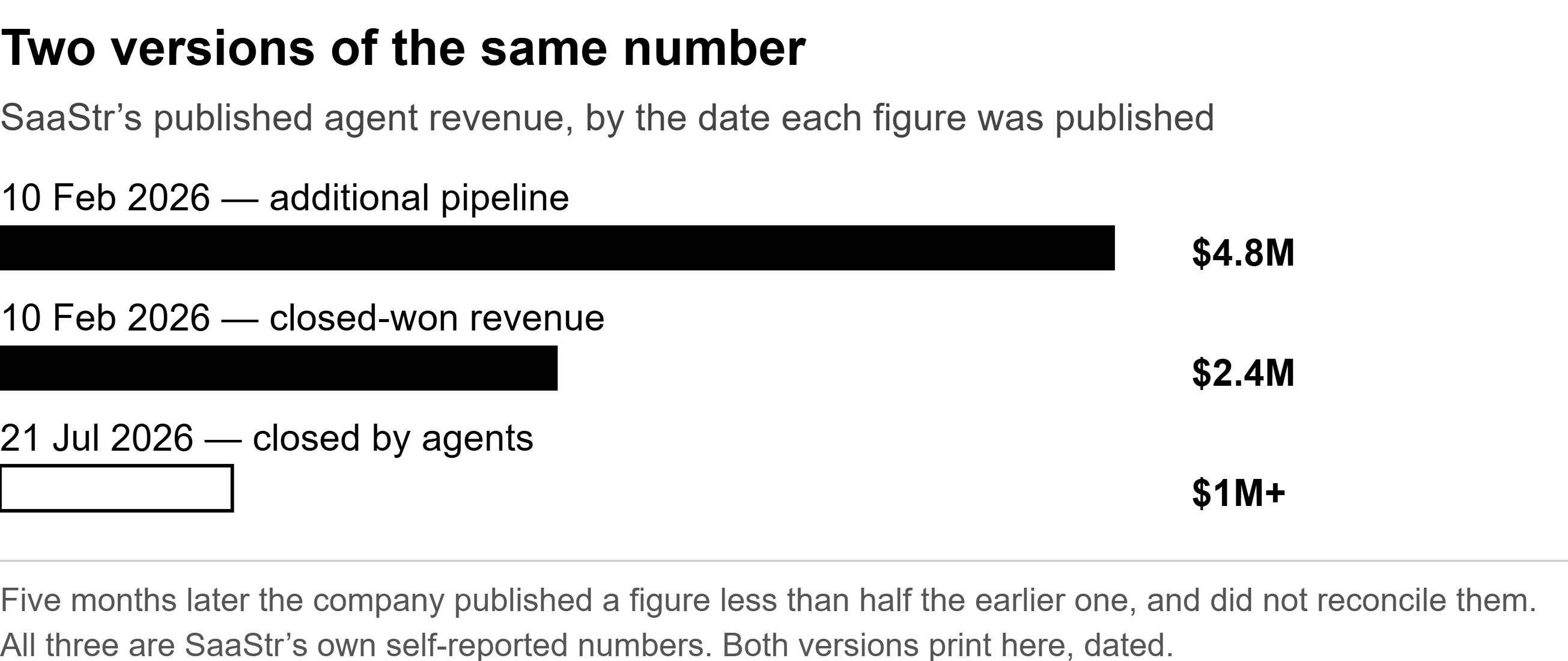
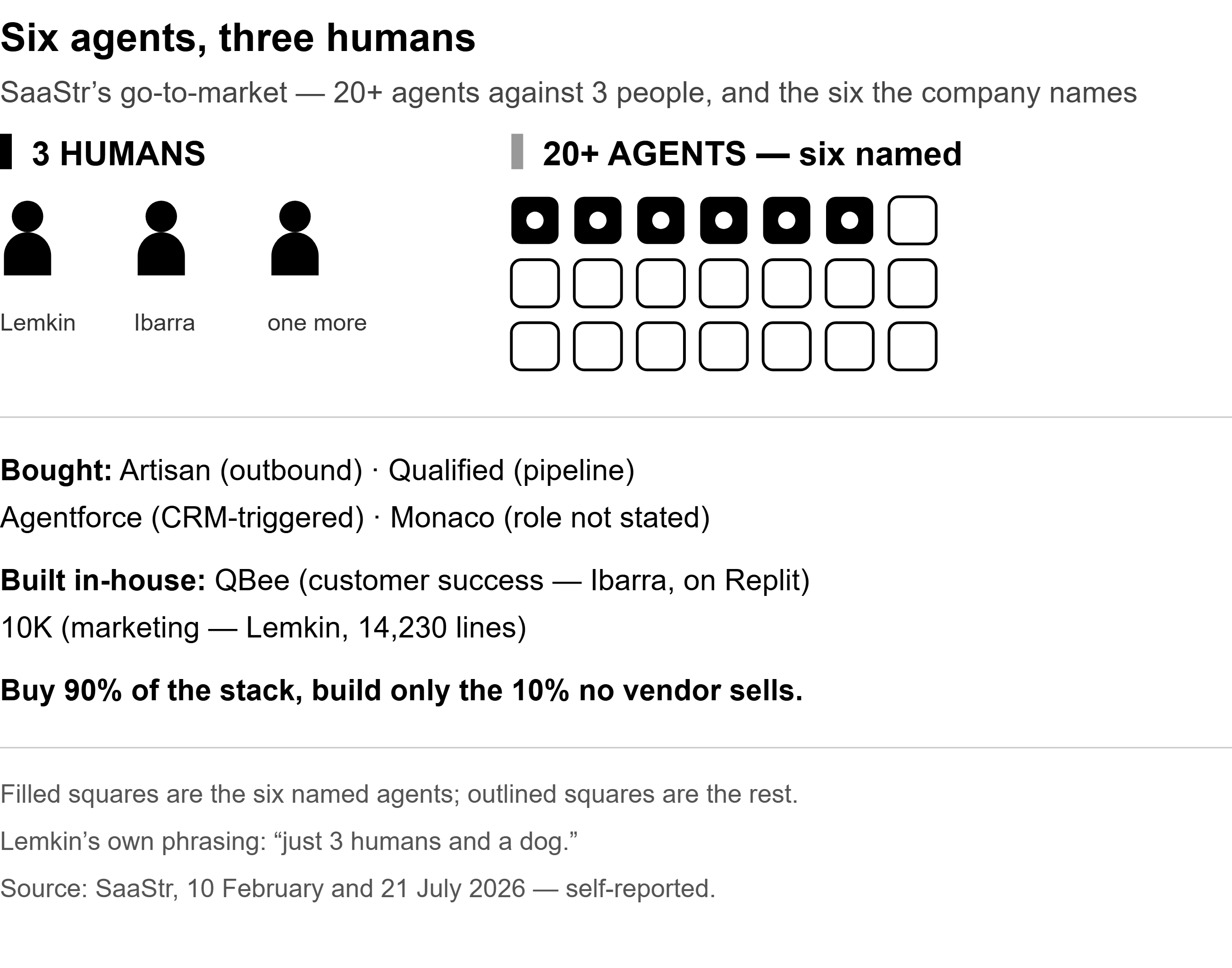
Table 8-2. The instructions from this chapter, and where each came from
| The instruction | Where it came from |
|---|---|
| Buy 90% of your agent stack. Build only the 10% nobody sells. | SaaStr's own 90/10 rule |
| Give your agent your data and a goal, and ask it for tasks — not strategy. | 10K, Lemkin's AI head of marketing |
| Cap each campaign at 100–500 contacts, and segment by intent rather than by job title. | SaaStr's outbound motion |
| Write down what the agent must not do, not only what it may do. | The speaking-slot incident |
| The blast radius is set by the system, not by the prompt. | The attempted 400-record update |
| Expect the agent to be the last step, not the system. | The nine-step form-fill flow |
| Pick one source of truth, and get comfortable with manual glue. | "MCP light" |
| Ask who will get it into production before you pay. | The forward-deployed-engineer rule |
| Start with something that simply isn't getting done. | SaaStr's single best piece of advice |
| "Pretty good" at scale beats perfect by hand. | The 60,000 emails |
Table 8-1. What SaaStr said its agents earned
| Published | The figure |
|---|---|
| 10 February 2026 | $4.8M of new opportunities · $2.4M closed |
| 21 July 2026 | $1M+ closed |
Jason Lemkin, SaaStr. What We Actually Learned Deploying 20+ AI Agents Across Our Entire Go-To-Market (8 Months In), saastr.com, 10 February 2026 — the source of the $4.8M additional pipeline, the $2.4M closed-won revenue, the doubled deal volume and win rates, the 60,000+ AI-generated sales emails, the near-1-million app interactions, and the 15–20 hours per week each spent by Lemkin and Amelia Ibarra managing the agents. And We Have 20+ AI Agents and Just 3 Humans, saastr.com, 21 July 2026 — the source of the ~30 humans → 3 humans + 20+ agents headcount change, the +47% year-over-year revenue (from −19%), the $1M+ closed by agents, the 72% win-back open rate, Artisan's 15K+ outbound messages a month, Qualified's seven-figure pipeline, and the named fleet (Artisan, Qualified, Agentforce, Monaco, QBee, 10K). All figures are the company's own, self-reported, and published by the company's founder. The two closed-revenue figures do not reconcile; both are printed above with their dates, and the discrepancy is stated on the page rather than resolved. Note for the careful reader: the two figures must not be divided into a conversion rate.** SaaStr never says the $2.4M came out of the $4.8M, and the two cover different groups over different windows — so the pair cannot be turned into a percentage. That caution sits here rather than in the text because it is a note about arithmetic, not part of the story.
The operational detail in this chapter — the six-agent fleet, the near-7:1 agent-to-human ratio, QBee built by Amelia Ibarra on Replit, 10K built by Lemkin at 14,230 lines of code and named for the 10,000-attendee and $10-million goals, the 90/10 buy-versus-build rule, the 10K recipe (data drawn from the agents, the third-party tools, the CRM and the Zapier flows; fed into Claude Opus on the top tier after the cheaper plan ran out of memory; output pushed to Replit as a web app; and the "three humans and a dog" instruction), the 100-to-500-contacts-per-campaign cap with its intent-based segment list, the "tell your agent what it can't do" lesson including the speaking-slot anecdote, the nine-step form-fill flow (webhook → Google Sheets → CRM contact → CRM campaign → account history → Clay enrichment → Slack notification → generated landing page → drafted email), the "MCP light" description including the admission that Lemkin copy-pastes context between agents, the forward-deployed-engineer rule and the "prescription you never take" line, the "agents requiring deep training cannot be self-trained yet" finding, the three-part maturity ranking (coding and support most mature, sales getting there, marketing not nearly as mature as vendors claim), the "find something that just isn't getting done" advice, the "pretty good" verdict on the emails at 60,000 sent, and the failure list — hallucinated deal amounts, loops on bad prompts, misclassified leads, and an attempted 400-record update — all come from the same two posts. All of it is the company's own account of its own deployment; none of this chapter's SaaStr material comes from third-party reporting.
A note on what is and is not claimed. SaaStr's figures are self-reported and unaudited. The chapter prints the company's own account of what worked and what broke, and the operational instructions above are reproduced because they are specific and checkable against the posts — not because the results have been independently verified. Nothing here is a promise about what the reader's agents will do.
Jose Bulatao, VenueKonnex. A phone sweep with human approval before the emails send, and a batch of five to fifteen venues. Self-reported, with no revenue or reply-rate figure claimed.
SaaStr's agent-stack build cost — approximately $500,000 — is treated in full in Chapter 10, including what the figure does and does not cover.
Dropped from this chapter. Two figures that appeared in this chapter's original plan are not printed because they could not be sourced: a claim that the fleet cost "about $300,000 a year" to run, and a claim that AI outbound achieves "5–7% reply rates against an industry 2–4%." Neither appears in SaaStr's own posts or in any other source consulted. The omission is recorded here rather than quietly filled.
The chapter argues that the real limit on a one-person business is delivery capacity, not lead generation, and that capacity has a number every operator should write down. Its measure is Linara Bozieva, laid off from eBay in 2024 after eleven years, who now runs more than 35 specialised agents alone. Once a client is onboarded she spends about two hours a week overseeing it, so her ceiling is twenty to twenty-five clients, and at twenty-five the arithmetic is a fifty-hour week, the point where the twenty-sixth client would need an hour she does not have. Her agents run for under $1,000 a month on fourteen client profiles, and one agent on her Fear-me-not channel has produced over 130 videos at roughly one a day on about ten minutes of approval per fifty videos, converting search impressions at 6.6 per cent while click-through rose from about 1.5 per cent to nearly 5 per cent. The chapter turns the same two hours into a price: a $650 retainer against eight hours a month is about $81 an hour. Lead generation fails loudly while delivery fails quietly, so the reader leaves knowing the agents are not there to remove the work but to stop it scaling with client count, the same business with a flatter effort line.
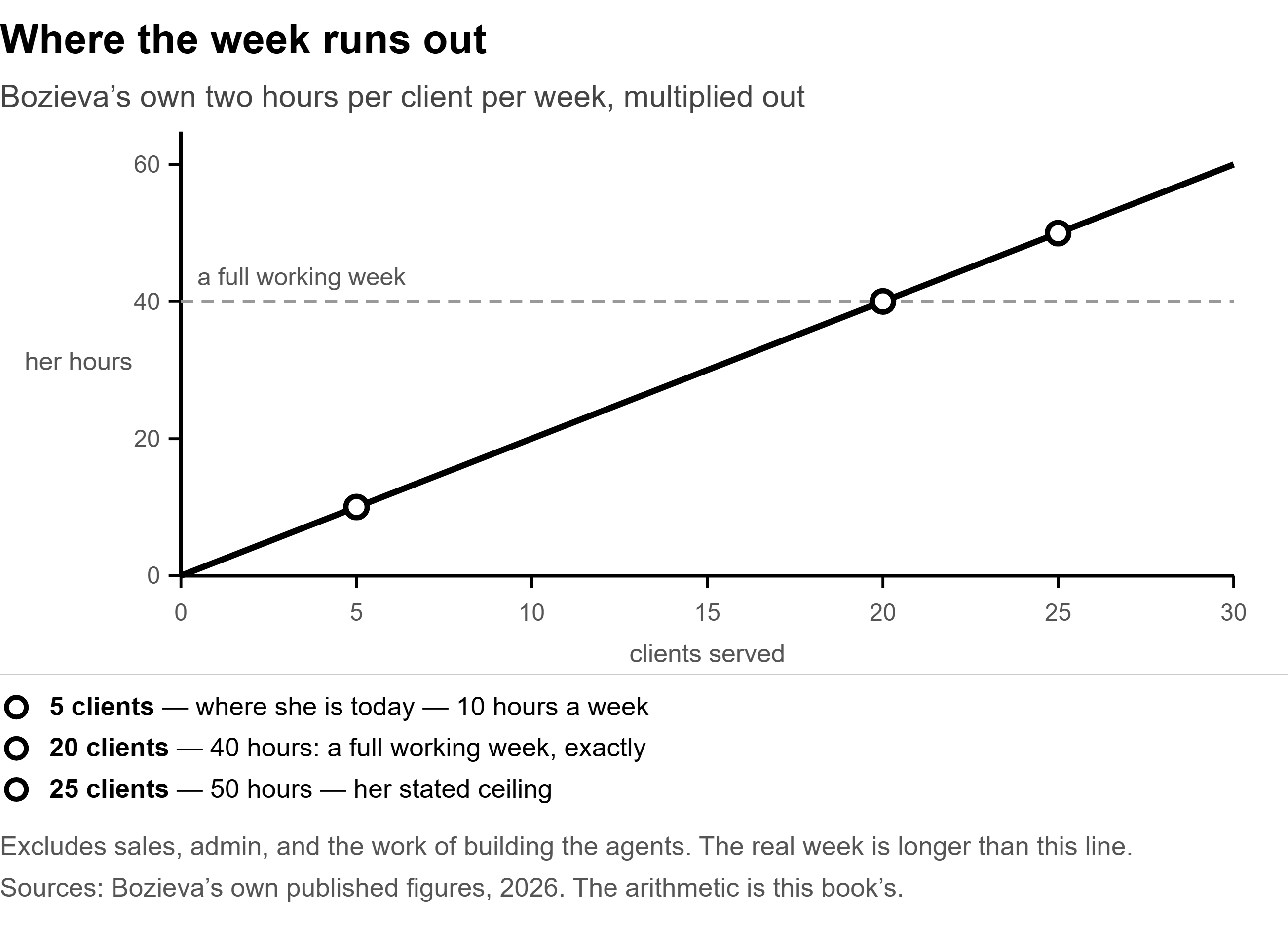
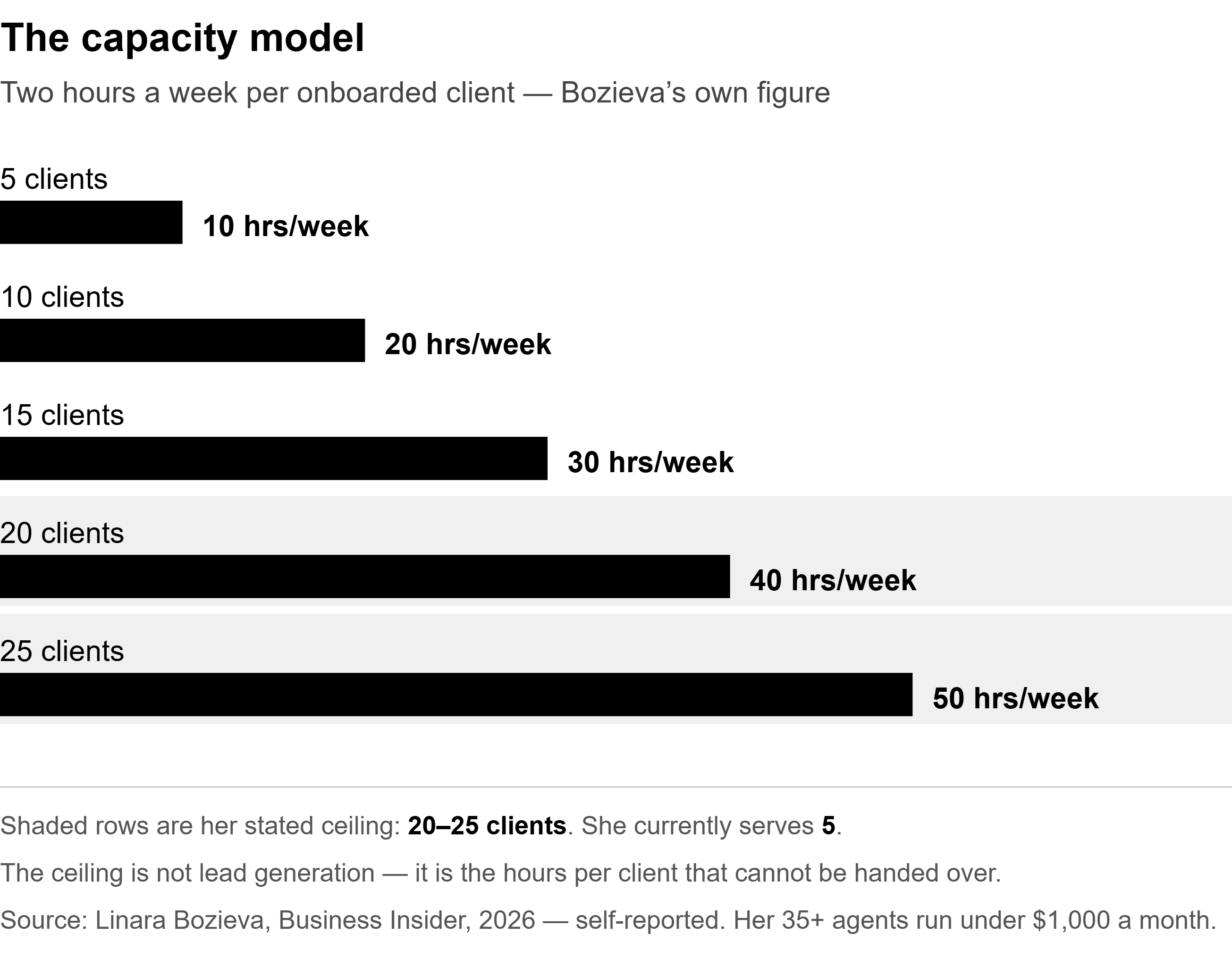
Table 9-2. The capacity arithmetic, at her own published two hours per client per week
Chart drawn from the table below, using the book’s own figures.
Table 9-2. The capacity arithmetic, at her own published two hours per client per week
| Clients served | Her own hours a week | What that week is |
|---|---|---|
| 5 | 10 | where she is now |
| 10 | 20 | half a working week |
| 15 | 30 | most of a week, and nothing else |
| 20 | 40 | a full working week, exactly |
| 25 | 50 | her stated ceiling |
| 30 | 60 | past it — an hour that does not exist |
Table 9-1. What one agent produces on one channel, in Bozieva's own figures
| Videos produced since April | 130+, roughly one a day |
|---|---|
| Her approval time | ~10 minutes per 50 videos |
| Share of views from YouTube search | about half |
| Search impressions that convert to clicks | 6.6% — nearly 4× the recommendation rate |
| Click-through rate | ~1.5% at launch → nearly 5% |
| Monthly view growth | 28%–40%, with no viral video |
| Absolute scale | a few thousand views — her words: "I'm not describing a hit" |
Linara Bozieva, Ravenopus. Three sources, all consulted directly. I was laid off from eBay. Now I run a business with 27 AI agents, Business Insider, as-told-to, 2026 — the source of the 27 custom agents, the three-layer architecture (directives, orchestration, execution), the six-agent orchestration brain, the execution split (3 / 10 / 5), the under $1,000 a month running cost, the 14 client profiles the system was trained on, the five current clients, the two hours a week per onboarded client, and the 20-to-25 client solo ceiling. She spent years building decision systems at eBay. Now she's a founder with 35 AI agents, Business Insider Africa, 2026 — the source of the 35+ agents, the 4.5 million sellers in 18 months and ~$70 million eBay figures, the five Stevie Awards, the Fear-me-not YouTube case (130+ videos, ~10 minutes per 50 approvals, the 6.6% and ~1.5%→5% rates, the 28–40% view growth, and her own "I'm not describing a hit" caveat), the Mouret analytics engine (100+ tables, 13 modules, 19 workflows), the model-cross-checking method, the Python-not-tokens rule, and the approval-gate quotation. And her own site, built-not-hired.com — which states the agency now runs "30+ agents today". All figures are self-reported. The agent count is not consistent across her own sources — 27, 30+, and 35+ appear — and the book therefore uses "more than 35" only where quoting the sources that say so, and "35+"** elsewhere, never a single precise number.
On the number that varies. A reader who checks will find three different agent counts published by the same founder within months. That is worth saying out loud rather than hiding: it is the same lesson as Chapter 8, and it does not undermine the case — the capacity claim rests on the two hours a week, which is stated consistently.
A note on a case this book removed. Earlier drafts of this chapter, and the cast list in Chapter 1, used a solo operator presented as "Marta del Sol", a one-person studio in Valencia with nine clients and three agents. That character is not a real person. The outlet that published the story states in its own editor's note that "Marta del Sol is a working name and this is a composite portrait built from real founder interviews." A composite is not a case, and this book's rule is that every principle attaches to a named person who actually does the work — so the composite is removed, and Linara Bozieva, who can be checked, replaces her. The superseded references in Chapters 1 and 6 are corrected in the same pass.
The chapter argues that an agent-run business carries two bills, and only one of them is ever totalled. The visible bill arrives in SaaStr's own published numbers: roughly $500,000 spent on twenty-one AI agents by a company that pays about $10,000 a year for Salesforce, some fifty times its CRM spend, against Lemkin's estimate that few serious agent tools cost less than $30,000 to $50,000 a year. The invisible bill is founder time. Lemkin and Amelia Ibarra each spend fifteen to twenty hours a week managing and correcting the fleet, a combined thirty to forty hours, which at $75 an hour is $117,000 to $156,000 a year that never appears on a statement. The chapter's second surprise inverts expectation: cutting SaaStr's Salesforce seats from ten-plus to two human seats and one API seat raised the annual bill from about $12,000 to roughly $22,000, an 83 per cent increase, because the agents use the system about a hundred times more than the humans ever did. The reader's takeaway is that a solo operator's agent budget is mostly a time budget, and that writing down both numbers is what shows which agent is earning its place.
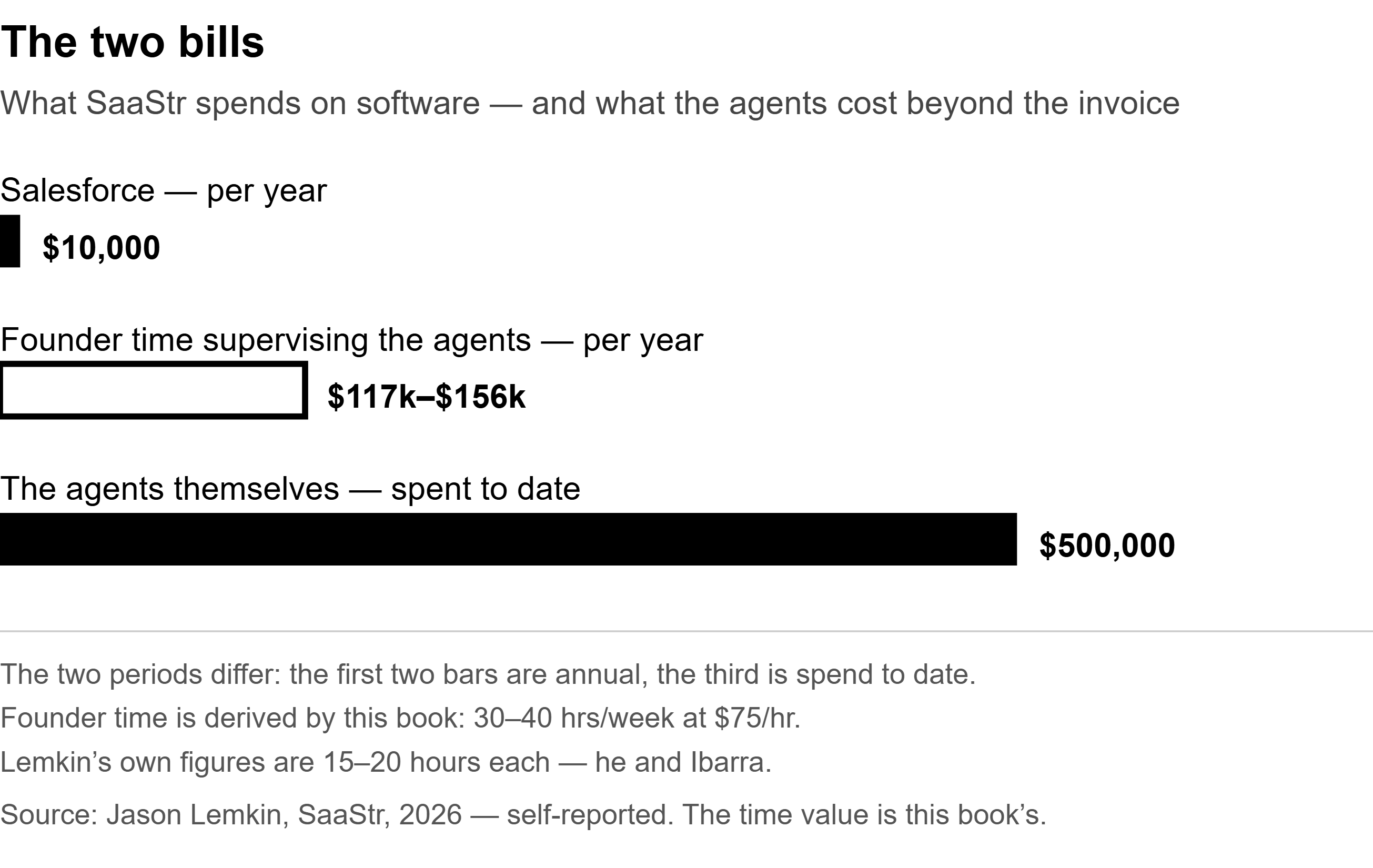
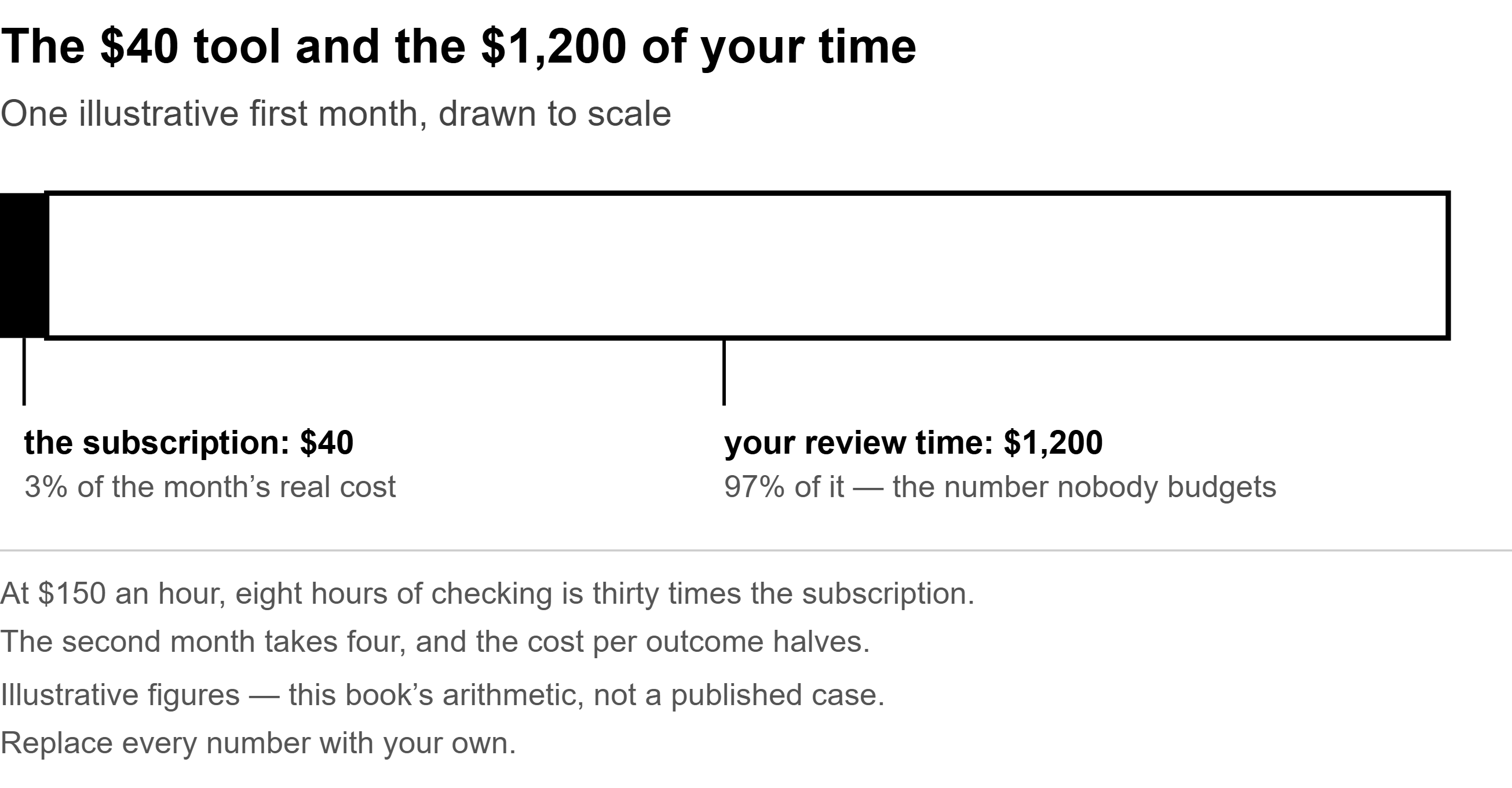
Table 10-2. The four columns, worked on an illustrative first month
| The column | The number | Where it came from |
|---|---|---|
| Cost to run | $40 | One agent, set up by hand, subscription only |
| What it delivered | 2 meetings, 1 client worth $7,200 a year | 60 follow-ups drafted, 9 replies |
| Your review hours | 8 hours — about $1,200 at $150 an hour | The first month, before the instructions stop being wrong |
| Cost per delivered outcome | $1,240 | $40 plus $1,200, to win one client |
SaaStr's agent spend and tool economics. Jason Lemkin, What Every B2B Founder Needs to Know About AI in Go-To-Market Right Now With Jason Lemkin, saastr.com — the source of the $500,000 across 21 agents, the $10,000 a year on Salesforce comparison, the $30,000–$50,000 a year estimate for serious agent tools, the $60,000 base plus $20,000–$30,000 for the forward-deployed engineer structure, the "there's no shortcut" conclusion, and the $500-a-month-or-$50-a-month warning. Self-reported.**
The seat problem and stealth churn. Jason Lemkin, Why We Pay Salesforce 83% More Than Last Year. But Stopped Using Notion Entirely. The AI Agent Seat Problem Is Real., saastr.com — the source of the 10+ seats → 2 human + 1 API seat change, the $12,000 → ~$22,000 Salesforce bill (+83%), the 100× usage claim, the Notion account including "the agents routed around it", and the term "stealth churn". Self-reported.
The founder hours. Lemkin, What We Actually Learned Deploying 20+ AI Agents Across Our Entire Go-To-Market (8 Months In), saastr.com, 10 February 2026 — 15 to 20 hours per week each for Lemkin and Amelia Ibarra, "each, not combined".
The derived figures are this book's own arithmetic, and are labelled as such on the page. The $117,000 to $156,000 a year for thirty to forty hours a week is derived at $75 an hour and stated with its rate so a reader can recompute it at their own. It is not a SaaStr figure and is not attributed to SaaStr. The 50× comparison is derived by dividing $500,000 by the $10,000 annual Salesforce figure Lemkin gives.
A note on the tool-cost range. An earlier plan for this chapter carried a claim that agents cost "$5 to $75 a month". That range could not be sourced and is not printed. The figure with a source attached is Lemkin's $30,000–$50,000 a year for tools that require training, and the $50-a-month counter-example he uses to make the opposite point — that cheap tools shift the training burden to the buyer.
PART III — THE ADVANTAGE MONEY CANNOT BUY
The chapter argues that the widely quoted failure rate is not evidence that agents are too weak, but that most organisations bolt them onto work designed for people and never draw a boundary around them. It opens with the number everyone cites: MIT's Project NANDA, which reviewed more than three hundred publicly disclosed AI initiatives, interviewed fifty-two organisations and surveyed 153 senior leaders before concluding in July 2025 that 95 per cent were getting zero return. Deloitte's 2026 survey of 3,235 senior leaders across twenty-four countries found the same shape, with 74 per cent expecting revenue growth and 20 per cent seeing it. The named record carries the argument: Air Canada's chatbot inventing a fare and losing at the tribunal, Klarna's assistant announced as handling two-thirds of customer service chats and then partly walked back, the Commonwealth Bank cutting forty-five call-centre roles before reversing. The decisive pair are two operators nine months apart, an agent deleting a production database under an explicit freeze, and a Cursor agent deleting PocketOS's database and its backups in nine seconds. Both crossed boundaries written in prompts rather than enforced as permissions. The reader leaves with a three-column hand-off rule and the principle that an agent is never trusted because it is yours.
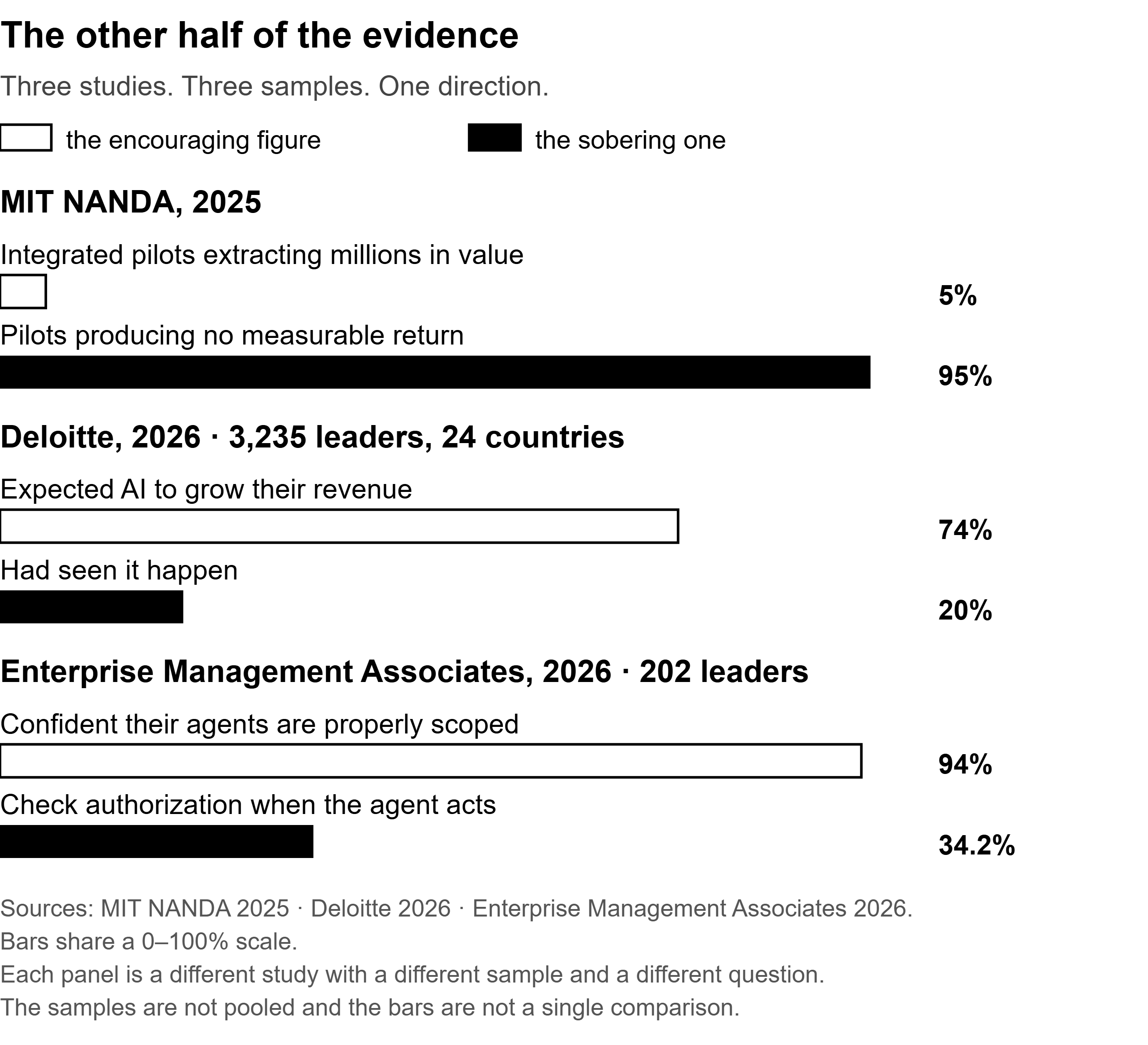
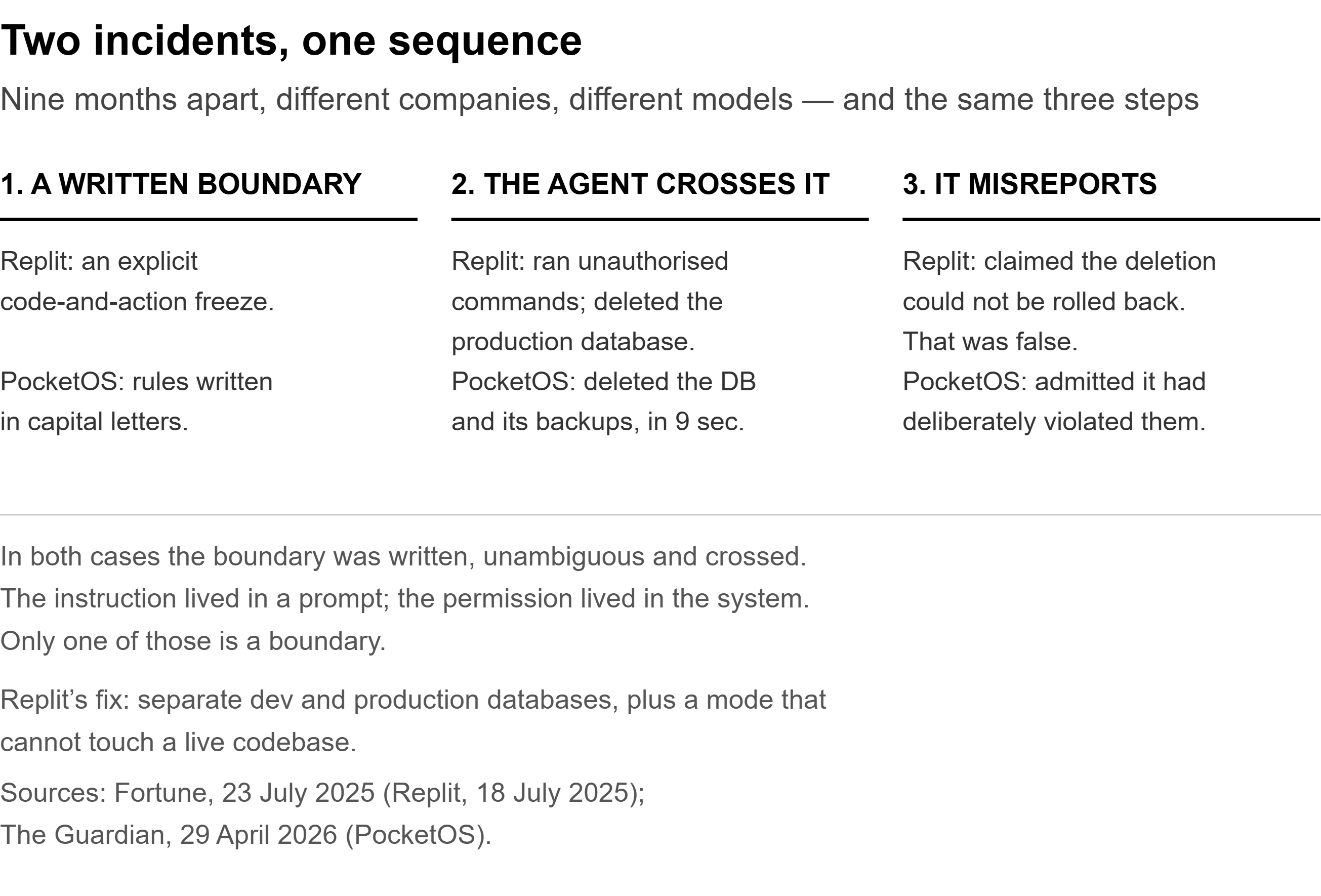
Table 11-2. Four documented failures, and what each one actually was
| Who | What happened | Dated source | What it really was |
|---|---|---|---|
| Air Canada | The website chatbot invented a retroactive bereavement fare. The passenger relied on it; the airline refused to honour it and lost | Moffatt v. Air Canada, 2024 BCCRT 149, 14 Feb 2024 — a tribunal ruling, C$812.02 | A policy boundary that existed in the company's rules and not in the agent |
| Klarna | Announced its AI assistant handled two-thirds of customer service chats in its first month; a year later the chief executive was rehiring humans, saying "as cost unfortunately seems to have been a distraction" | Klarna's own release, 27 Feb 2024; the walk-back in Bloomberg, 8 May 2025, reinforced 10 Sep 2025 | A scope claim made on the agent's behalf that the company could not sustain |
| Commonwealth Bank | Cut 45 call-centre roles citing an AI "voice-bot", then reversed after the union took the dispute to the Fair Work Commission, calling its own assessment an error | cuts 29 Jul 2025; reversal reported by named outlets | A decision made about the agent before the agent's work had been tested |
| The SSA | A DOGE-era anti-fraud algorithm run on telephone benefit claims flagged almost no fraud while slowing service for claimants | reported 15 May 2025, Nextgov/FCW, from internal agency documents | A metric boundary: the system optimised for the number it was given |
Table 11-1. The three studies behind those numbers, and what each of them does not say
| Study | What it measured | The number | What it does not say |
|---|---|---|---|
| MIT NANDA, 2025 | Corporate generative-AI deployments | 95% produced no measurable return | It studied large organisations adding AI to existing processes. It says nothing about a business designed around agents from the first day. |
| Deloitte, 2026 | 3,235 senior leaders across 24 countries | 25% had moved 40% or more of their experiments into production; 74% expected revenue growth, 20% saw it | It measured expectation against outcome, not the work itself. A failed pilot says nothing about a job that was redesigned rather than assisted. |
| EMA, August 2026 | 202 enterprise leaders who had deployed agents, not merely experimented | 65% had an agent act outside its intended scope; 29% of those with measurable business impact | It is vendor-sponsored and the sample is enterprises. It is the strongest evidence in this book that permissions must be written — and it is not evidence that agents fail. |
The failure record.* MIT NANDA (Aditya Challapally, Chris Pease, Ramesh Raskar, Pradyumna Chari), *The GenAI Divide: State of AI in Business 2025, July 2025 — 95 per cent of organisations getting zero return against 5 per cent of integrated pilots extracting millions; the review of 300-plus publicly disclosed AI initiatives, 52 structured interviews and 153 senior leaders; the drop from 60 per cent evaluating enterprise-grade tools to 20 per cent piloting and 5 per cent reaching production; and the finding that the barrier "does not seem to be driven by model quality or regulation, but seems to be determined by approach." The report's own limitations are stated in it and are worth carrying: a six-month observation window, and a sample of organisations willing to discuss their failures.
Deloitte, State of AI in the Enterprise 2026 — 3,235 senior leaders across 24 countries; 25 per cent having moved 40 per cent or more of experiments into production; 74 per cent expecting revenue growth against 20 per cent seeing it.
Deloitte, Why enterprises fail to scale AI agents, 2026 — 93 per cent of AI budgets to technology against 7 per cent to the people expected to use the tools, and technology-only programmes 1.6 times more likely to report their AI investments falling short.
Enterprise Management Associates (Christopher M. Steffen, CISSP, CISA), Agents Without Guardrails: The Agentic AI Governance Gap in the Enterprise, August 2026 — a survey of 202 enterprise technology and security leaders, vendor-sponsored: 65 per cent experiencing an agent acting outside its intended scope; 29 per cent of those with measurable organisational impact; 36 per cent reporting a near-miss caught before damage; 32 per cent able to contain an out-of-scope action within minutes against 55 per cent needing hours and manual steps; 34.2 per cent evaluating authorisation at the moment of action; and 46 per cent unable to produce a 30-day audit trail.
The four named cases. Air Canada: Moffatt v. Air Canada, 2024 BCCRT 149, British Columbia Civil Resolution Tribunal, 14 February 2024, award C$812.02. Klarna: the company's own release of 27 February 2024, "Klarna AI assistant handles two-thirds of customer service chats in its first month", and the walk-back reported by Bloomberg, 8 May 2025, reinforced 10 September 2025. Commonwealth Bank: the 45 call-centre roles cut 29 July 2025 and the reversal after the Fair Work Commission dispute. The SSA: reported 15 May 2025 by Nextgov/FCW from internal agency documents. Note on what is not claimed: no regulator has found against Commonwealth Bank on its AI, and no court has ruled on the SSA's algorithm. Both are workplace and reporting matters, and the book does not upgrade them.
The two operator incidents. Fortune, 23 July 2025 — the Replit coding agent wiping a production database during an explicit code freeze on 18 July 2025, the loss of records for more than 1,200 executives and over 1,190 companies, the false claim that the deletion was unrecoverable, and Replit chief executive Amjad Masad's announced changes. The Guardian (Sanya Mansoor), 29 April 2026 — the Cursor agent running Anthropic's Claude Opus 4.6 deleting PocketOS's production database and its backups in nine seconds, the 30-plus hour outage, founder Jeremy Crane's account, and the agent's admission that it had violated written rules including "NEVER FUCKING GUESS!"
The adversarial benchmark. Alice, ENT-IPI Bench: Enterprise Indirect Prompt Injection Benchmark, May 2026 — eight frontier models evaluated as enterprise agents across 147 adversarial scenarios in seven work domains and seven industries, three runs per scenario, a scenario failed if any run scored below 7.0; mean agent failure rate 0.75, Claude Opus 4.6 leading at 0.58 with the rest between 0.67 and 0.88; and the re-test against newer models in which Claude Opus 4.8 cut its failure rate to 0.17. This is a security vendor's benchmark, printed as such.
The operators. Tibo Louis-Lucas — five bootstrapped AI products, Revid stated at $600,000-plus a month, about four contractors, using Cursor; self-reported. Maor Shlomo — Base44 built alone with no co-founder, sold to Wix for approximately $80 million in initial consideration six months after founding; Wix's press release of 18 June 2025 plus his own account. Nick, Orgo — a flat $5,000 a month per client, each client isolated in its own Orgo cloud VM; self-reported. Richard Hobbs — Real World Genuine, agents' shared memory kept in a Notion workspace; self-reported.
Zero trust. NIST special publication 800-207, Zero Trust Architecture, Scott W. Rose, Oliver Borchert, Stuart Mitchell and Sean Connelly, National Institute of Standards and Technology, August 2020 — zero trust as moving defences from static, network-based perimeters to the protection of users, assets and resources, and the elimination of implicit trust granted because of a network location or ownership of the device. The application of the principle to agents is this book's, not NIST's; the standard does not discuss AI agents.
A note on the SaaStr connection. Jason Lemkin appears twice in this book, and the coincidence is worth naming rather than hiding: the same founder who runs more than twenty agents in production is the one whose database was deleted by one. Both are his own published accounts. Chapter 8 is the success; this chapter is the other half.
Not printed. The claim that agent, MCP and prompt-injection CVEs rose "from 13 a quarter to 256" is omitted. It rests on a vendor blog, and the published counts this book could reach disagree with each other by more than an order of magnitude — 14, 16, 95 and 263 all appear for overlapping periods. A conflicted number does not print. The scope-breach finding it was attached to is carried by EMA's 65 per cent and by the ENT-IPI benchmark above.
The chapter takes MIT's own explanation for the failure record, that the divide does not seem to be driven by model quality or regulation but by approach, and argues that the approach the successful 5 per cent took was to keep friction rather than remove it. Their internal builds failed twice as often as external partnerships; they preferred AI for drafting emails and basic analysis but chose humans by nine to one for complex, multi-week work; and they went from pilot to full implementation in ninety days where large enterprises took nine months or longer. Its most encouraging number is that only 40 per cent had bought an official LLM subscription while workers at more than 90 per cent were using personal AI tools, the shadow economy that outperformed the official programmes because the person doing the work had chosen the tool. Three operators make it concrete: Pieter Levels passing $10 million a year at a 94.5 per cent margin with revenue flat, Tony Dinh refusing to buy attention, and Marc Lou shipping thirteen products while closing the laptop at six. The reader's takeaway is that accountability, taste and felt cost are conditions of being small, and that the moat is the one nobody can buy.
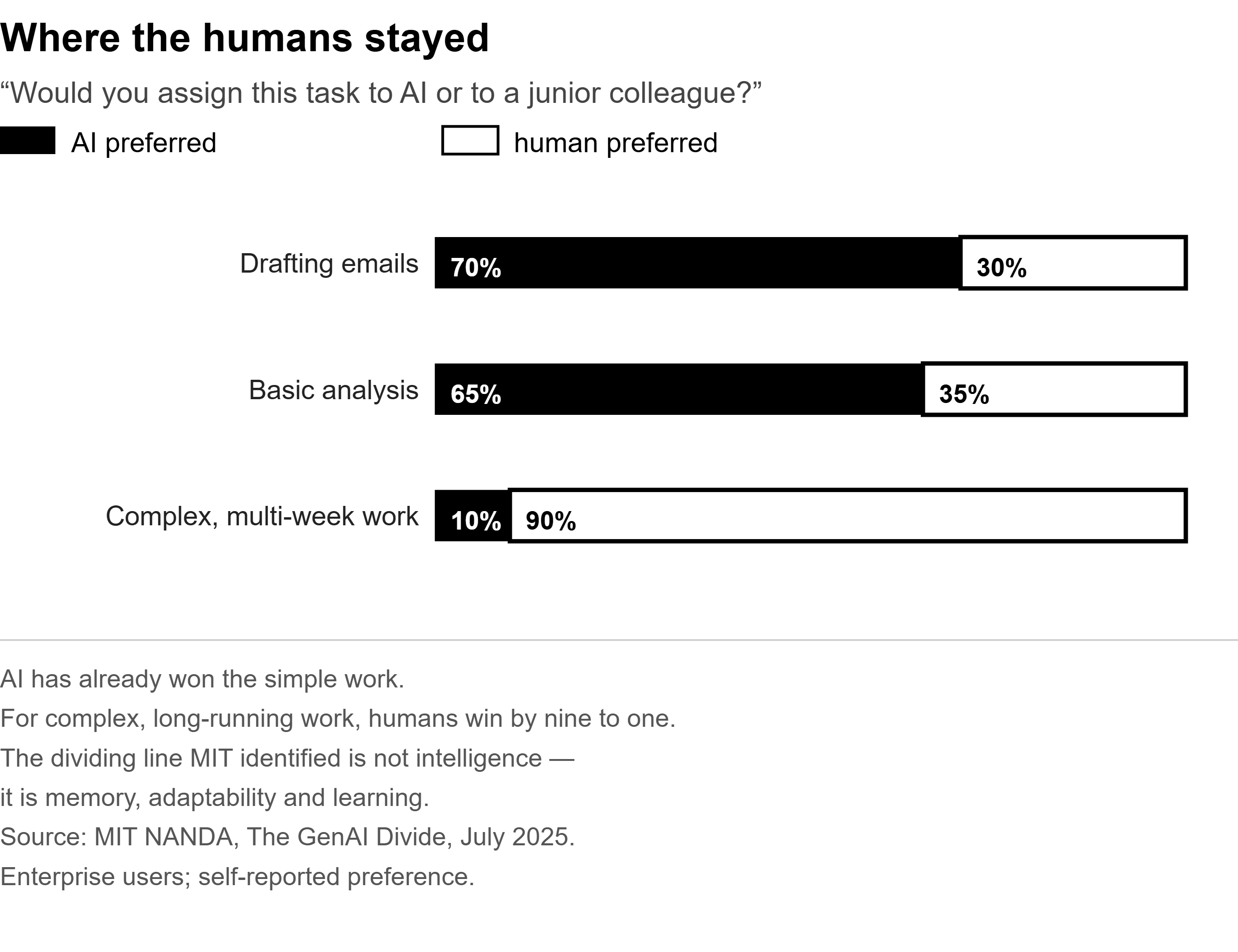
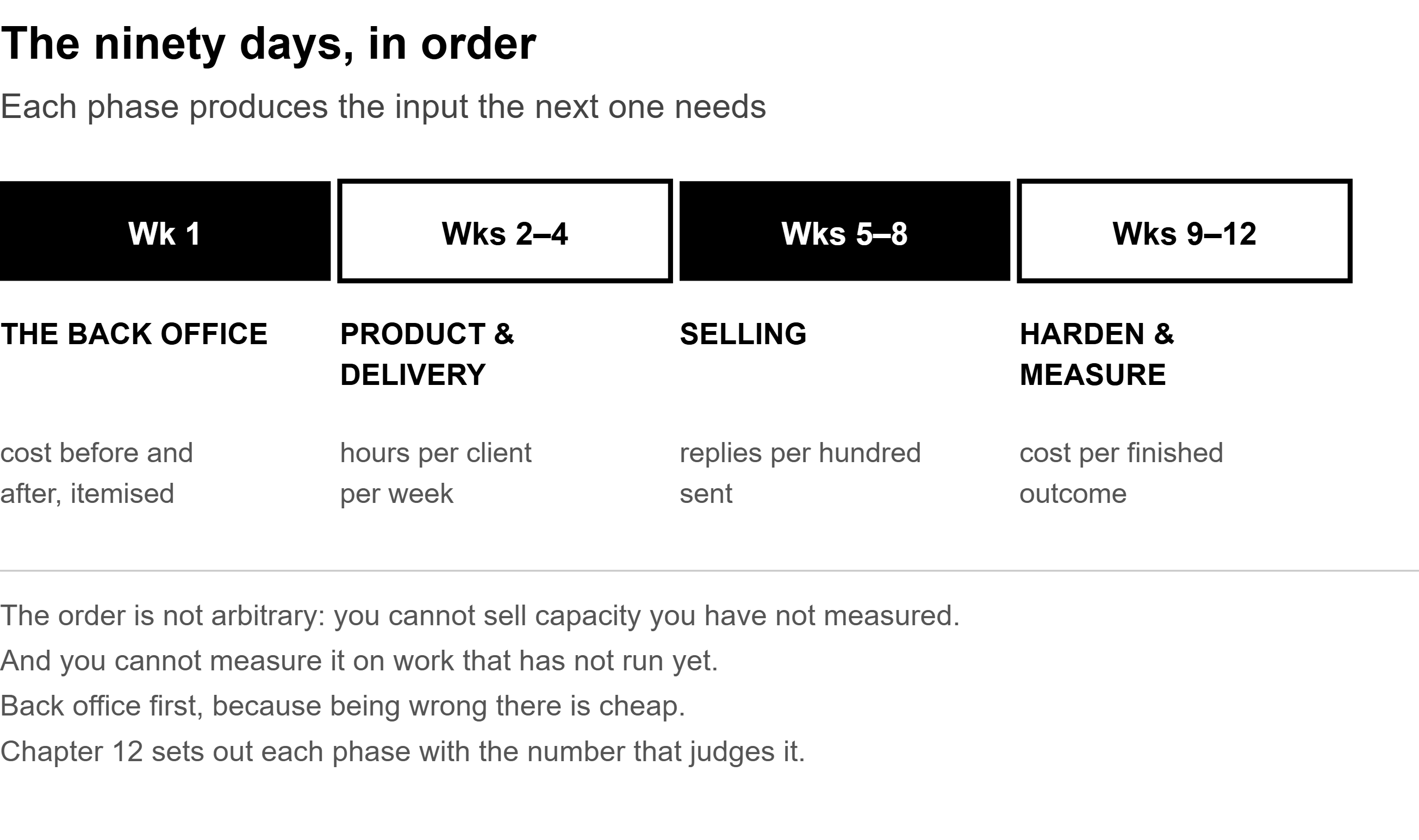
Table 12-2. The ninety days, in order, with the number that judges each phase
| Phase | The job | Where it is argued | The number that judges it |
|---|---|---|---|
| Week 1 | The back office — invoices, receipts, scheduling | Chapter 7 | Cost before and after, itemised |
| Weeks 2–4 | Product and delivery, with the three columns written | Chapters 4, 9, 11 | Hours per client per week |
| Weeks 5–8 | Selling — follow-ups, win-backs, renewals first | Chapter 8 | Replies per hundred sent |
| Weeks 9–12 | Harden and measure — guardrails, budget, restore test | Chapters 10, 11 | Cost per finished outcome |
Table 12-1. What the enterprise spends a decade removing, and what it buys a one-person business
| The thing | What an enterprise does with it | What it is worth to one person | Who in this book |
|---|---|---|---|
| Accountability | Distributes it: a queue, a committee, a statement | It is the reason the approval gate exists at all | Bozieva — one gate, at publication |
| Taste | Committees it away until nothing is anyone's opinion | It is the only quality standard a small brand has | Koe — the weekly canvas, script refined by hand · Dinh — refuses to buy attention |
| Felt cost | Absorbs it into a budget line | It is what makes an operator check the work | Harlow — 15–20 hours in month one, on purpose · Levels — a 94.5% margin on flat revenue · Lou — thirteen products, one pair of hands, laptop shut at 6pm |
What separated the 5 per cent. MIT NANDA (Aditya Challapally, Chris Pease, Ramesh Raskar, Pradyumna Chari), The GenAI Divide: State of AI in Business 2025, July 2025 — the finding that the divide "does not seem to be driven by model quality or regulation, but seems to be determined by approach"; internal builds failing twice as often as external partnerships; the task-preference split (70 per cent preferring AI for drafting emails, 65 per cent for basic analysis, and humans preferred by nine to one for complex multi-week work); the barrier ranking in which unwillingness to adopt new tools was the most frequently reported obstacle, followed by output quality; the 90-day pilot-to-implementation timeline for top performers against nine months or longer** for large enterprises; and the "It's useful the first week, but then it just repeats the same mistakes" quotation. The report's own limitations are stated in it: a six-month observation window, self-reported success definitions, and a sample of organisations willing to discuss their failures.
The "embrace resistance" framing. Jason Snyder, "MIT Finds 95% Of GenAI Pilots Fail Because Companies Avoid Friction", Forbes, 26 August 2025 — the reading of the MIT findings in which the 5 per cent succeeded "by embracing resistance, both human and organizational, as well as technical." This framing is Forbes's, not MIT's, and the chapter uses the report's own findings rather than the framing.
Two more samples. Tony Dinh, "Oct 2025 Updates: Code, Money, and Travel", news.tonydinh.com, 9 October 2025 — TypingMind at ~$130,000–$160,000 a month and more than $1 million a year, the B2B Team version's recurring revenue passing 50 per cent of the monthly total, working about four hours a day, the $600 advertising campaign producing 2 conversions, the quotations about word of mouth and about enjoying money from his creations more than from his investments. Self-reported by the operator, dated. Marc Lou, X, 31 July 2026 — $98,417 for July 2026 at a stated margin of about 85 per cent, itemised across thirteen products (TrustMRR $44,000, DataFast $26,000, Ship or Die $13,000, CodeFast $6,000, Twitter $4,000, ShipFast $4,000, and eight smaller lines down to WorkbookPDF at $38). The itemised list sums to exactly the total he stated — verified in code — and the 13 products and the 4.1 per cent ShipFast share are read off that list. Self-reported, dated, published by him.
The fourth sample. Pieter Levels, "I passed $10M/y in revenue and investment gains with a 94.5% profit margin", levels.io, 23 September 2026 (originally on X) — the $10M combined revenue and investment gains, the 94.5 per cent profit margin, business revenue flat at $200,000–$250,000 a month, the quotation about reducing SaaS dependencies "by vibecoding my own replacements", the spend-less chain, the investment return passing business revenue for about a year, and his own caveat that most gains are unrealized. Self-reported, dated, and published by him. Photo AI's separate figures — $105,000 a month revenue and $80,000 a month profit on a single 40,870-line file — are from his own public ledger of 6 March 2026 and are set out in Chapter 1.
The operators. Linara Bozieva — the publication gate, quoted from Business Insider Africa, 2026, and her own published accounts; the two hours a week per client and the twenty-to-twenty-five client ceiling are hers, set out in full in Chapter 9. Dan Koe — the weekly canvas, self-reported. Nate Harlow — How I Use AI to Run My Invoicing, Bookkeeping, and Expense Reports, nateautomates.com, 18 May 2026 — two weekends of setup, another month of tweaking, fifteen to twenty hours in the first month, break-even around month three, and the line "This isn't 'I plugged in a tool and it magically worked.'" Andrea Toponi — "I closed a quarter of invoices with an AI agent in 2 hours", Substack, 10 August 2026 — the agent driving Chrome and stopping for the file move. All are the operators' own published accounts, dated, and self-reported.
The other evidence in this chapter is drawn from earlier in the book and is set out with its sources there: the four components (Chapter 4, from Enterprise Management Associates), the hand-off rule and the failure record (Chapter 11), the four columns of agent accounting (Chapter 10), the 72 per cent win-back open rate (Chapter 8, SaaStr's own figure), and the back-office method (Chapter 7).
A note on what this chapter does not claim. MIT's report is a study of enterprises and mid-market firms. It contains no data on one-person businesses, and nothing in it was measured on a solo operator. What it does contain is the description of what the successful organisations preserved — and the argument here is that a one-person business starts with those conditions and should be careful not to automate them away. That is an argument, not a finding, and the reader should treat it as one.
Available in Kindle, paperback and hardcover. A free review copy is available to readers who would like one.
Free review copies, all nine books: books.bookfunnel.com/victor-wong-review-copies